You’ve booked the flights. You’ve cleared your calendar. But every hotel you look at in Costa Rica looks the same — pool, buffet, concrete walls. You want something that feels like the actual jungle, not a sanitized version of it. A treehouse stay solves that. The problem is picking one that’s worth the money and not just a Instagram prop with thin walls and no hot water.
I spent a weekend digging into the real options. Here’s what I found: five treehouse stays that deliver on location, comfort, and that “I’m actually in the rainforest” feeling. Prices are for 2026 peak season (December through April).
1. Finca Bellavista: The Treehouse Community That Works
Finca Bellavista sits on 600 acres in the southern Pacific zone, near the Osa Peninsula. It’s not a single treehouse — it’s a whole network of them, connected by suspension bridges and trails. Think of it as a treehouse village with shared hot springs, a river pool, and a communal dining pavilion.
Costs for 2026:
- Treehouse rental: $185–$350 per night (sleeps 2–6)
- Meal plan (optional): $45 per person per day for three meals
- Shuttle from San José: $55 per person one-way
The trade-off is real. You share the property with other guests at the hot springs and dining area. If you want total isolation, this isn’t it. But for solo travelers or couples who want community without sacrificing the treehouse experience, it’s the best value in Costa Rica right now.
One thing to know: No air conditioning. The elevation (1,500 feet) keeps nights cool, but daytime humidity is high. Pack light cotton clothes and a battery-powered fan.
Best for: Budget-conscious travelers who don’t mind sharing amenities
I’d pick Finca Bellavista over a standard eco-lodge any day. The suspension bridges alone make it worth the drive.
2. Nayara Tented Camp: The Splurge That Delivers
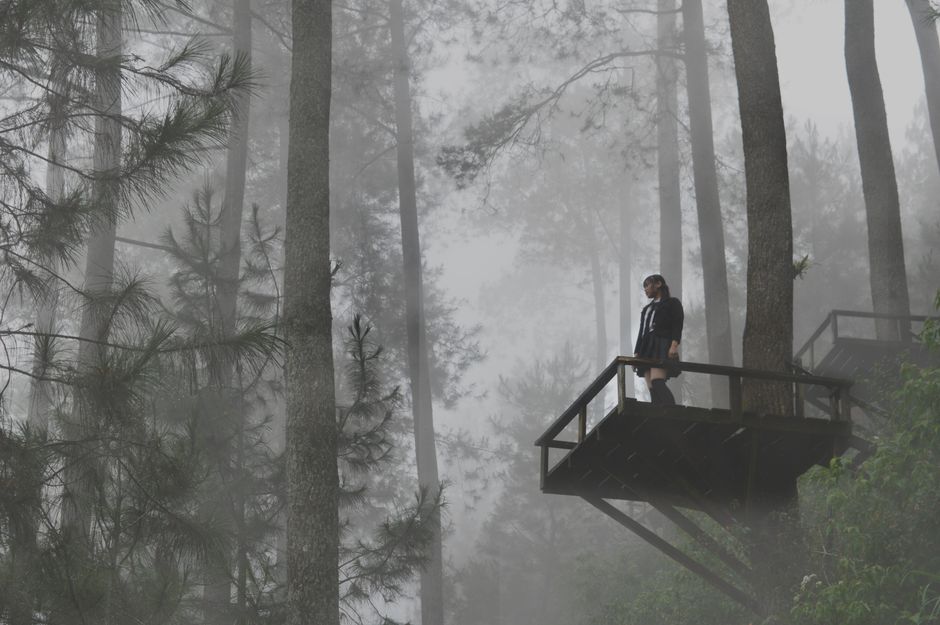
Nayara Tented Camp sits on the slopes of Arenal Volcano. It’s a treehouse-meets-luxury-tent hybrid. You get canvas walls, a private plunge pool, and outdoor rain shower — all elevated on wooden platforms 15 feet above the forest floor.
This is the most expensive option on this list. Rates for 2026: $650–$1,200 per night, depending on the season and tent size. That includes breakfast and access to the adjacent Nayara Springs hot springs.
The key differentiator: soundproofing. The tents use thick canvas and double-layer flooring. You won’t hear your neighbors, and they won’t hear you. That’s rare in treehouse accommodations.
The failure mode here: Booking a standard room at Nayara Springs instead of the tented camp. The tents are the whole point. The standard rooms are nice but they’re just nice hotel rooms. The tents feel like you’re sleeping in the canopy.
Best for: honeymooners or couples celebrating something big
If your budget allows one big splurge in Costa Rica, this is it. Book the “Treehouse Tent” category specifically — it has the best view of Arenal.
3. Tree House Lodge Costa Rica (Playa Negra): Ocean + Jungle Combo
This one’s different. Tree House Lodge Costa Rica is a single three-story house built around a massive Guanacaste tree, located 50 meters from Playa Negra beach in the Guanacaste region. The tree grows right through the center of the building.
2026 pricing: $225–$400 per night for the entire house (sleeps up to 6). That’s cheaper than a single hotel room at most beach resorts.
The structure is open-air. The kitchen, living area, and bedrooms all have louvered windows instead of glass. You hear the ocean from every room. The third-floor lookout tower has a 360-degree view of the coastline.
What to watch out for: Monkeys. They’ll steal fruit from the kitchen counter if you leave the windows open. The owners provide a lockbox for food, but some guests forget. Also, the stairs are steep — not suitable for toddlers or anyone with mobility issues.
This is the only treehouse on this list with direct beach access. Playa Negra is a black-sand surfing beach with consistent waves year-round.
Best for: surfers and families who want ocean views from the treetops
Book it for a week if you surf. The break is a five-minute walk from the front door.
4. Monteverde Treehouse: Cloud Forest Canopy Living
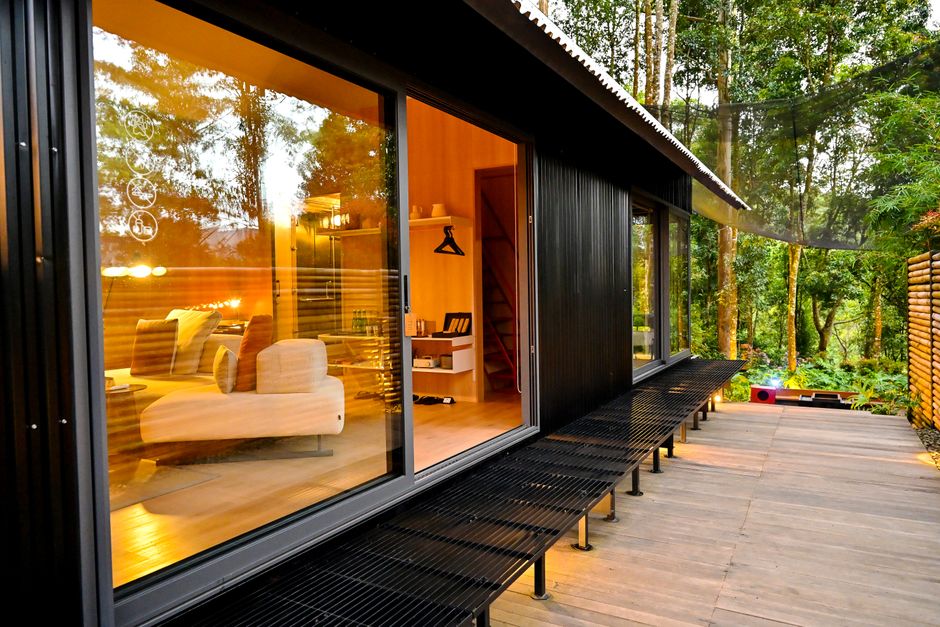
Monteverde sits at 4,600 feet in the cloud forest. The treehouse here — called “Casa del Arbol” — is a single rental unit on a private reserve. It’s a two-story wooden structure wrapped around a fig tree, with a wraparound deck overlooking the canopy.
Rates for 2026: $200–$320 per night (two-person minimum, three-night minimum during peak season).
Monteverde is colder than the coast. Nighttime lows drop to 55°F (13°C) in dry season. The treehouse has a wood-burning stove and electric blankets. Bring a fleece jacket even in March.
The biggest mistake people make: They book this treehouse without understanding the road access. It’s a 4×4-only driveway, 2.5 miles of unpaved road from the main highway. The owner will meet you at the bottom with a truck if you ask, but you’ll pay $40 for the shuttle. Rent a SUV with high clearance.
What you get in exchange: total silence at night. No road noise, no neighbors, just wind through the leaves and howler monkeys in the distance.
Best for: couples who want complete solitude in the cloud forest
This is the most romantic option on the list. The deck has a hammock and a propane fire pit.
5. Treehouse del Rio: Budget Jungle Base Camp
Treehouse del Rio is a three-unit property on the Sarapiquí River, about 90 minutes from San José. Each unit is a standalone treehouse with a queen bed, mosquito netting, and an outdoor bathroom with a rain shower.
2026 pricing: $95–$150 per night — the cheapest option on this list by a wide margin.
You trade luxury for location. The property has a riverfront deck with direct access to swimming holes and kayaking. White-faced capuchin monkeys visit the trees around the treehouses every morning around 7 AM.
The catch: Thin walls. The treehouses are close together (about 20 feet apart). If your neighbors are loud, you’ll hear them. The owner provides earplugs in each room.
Also, no Wi-Fi in the treehouses themselves. There’s a signal at the main lodge, 100 feet away. This is a feature, not a bug, for most guests — but worth knowing if you need to work remotely.
Best for: backpackers and adventure travelers on a tight budget
For under $100 a night, you get a genuine treehouse on a river with monkeys. That’s hard to beat in Costa Rica.
Quick Comparison Table
| Property | Price per Night (2026) | Best For | Key Trade-off |
|---|---|---|---|
| Finca Bellavista | $185–$350 | Budget travelers, community seekers | Shared amenities, no A/C |
| Nayara Tented Camp | $650–$1,200 | Luxury couples | Very expensive |
| Tree House Lodge (Playa Negra) | $225–$400 | Surfers, families | Open-air = wildlife enters |
| Monteverde Treehouse | $200–$320 | Solitude seekers | Rough road access |
| Treehouse del Rio | $95–$150 | Backpackers | Thin walls, no Wi-Fi in room |
When a Treehouse Stay Isn’t the Right Call
Treehouses look amazing in photos. But they come with real downsides that hotels don’t have.
If you need guaranteed quiet: Skip treehouses. Wooden platforms amplify footsteps from upstairs neighbors. Wind rattles the walls. Monkeys scream at dawn. Hotels with concrete construction are quieter.
If you have mobility issues: Every treehouse on this list requires climbing stairs or ladders. None have elevators. The Monteverde and Playa Negra options have the steepest stairs.
If you’re traveling with very young children: Railings on treehouse decks are often wider apart than building codes require in the US. Kids can slip through. The Treehouse del Rio and Finca Bellavista are the safest options for small children because their decks have tighter railings.
Treehouses solve a specific problem: they put you physically inside the forest canopy. If that’s what you want, any of these five will deliver. If you just want a nice view from a room, a standard eco-lodge with floor-to-ceiling windows costs half as much and has thicker walls.
The treehouse trend in Costa Rica isn’t slowing down. New builds are popping up every year, especially around Uvita and the southern Nicoya Peninsula. By late 2027, there will likely be twice as many options. For now, these five are the ones worth booking — each for a different reason, each with a trade-off you can live with.