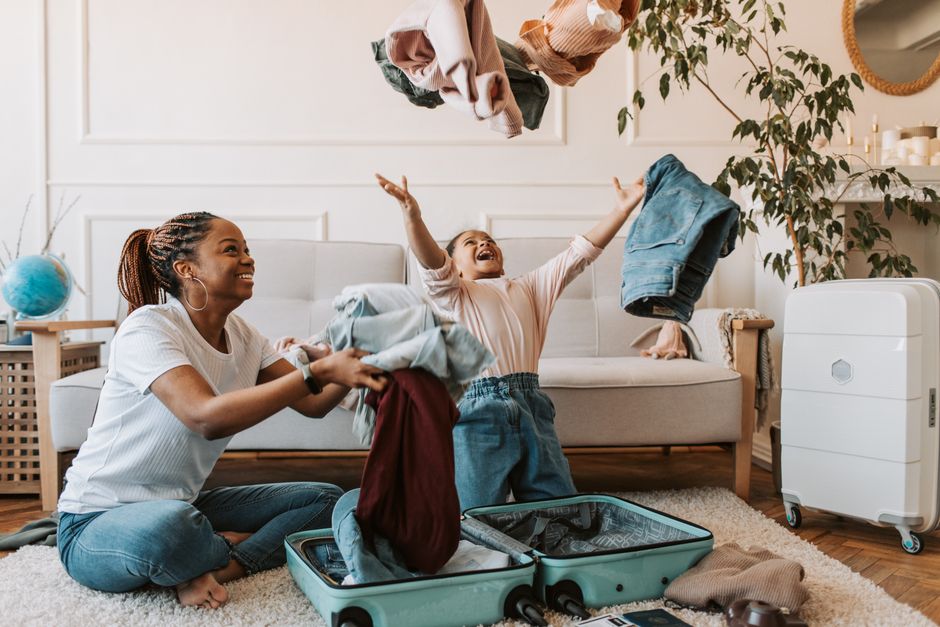
A 5-day trip can cross three weather patterns in one day: cool streets at breakfast, warm pavement after lunch, and rain before dinner. That is why the best shoulder-season packing list is built around layers, not extra outfits.
How to read the weather before packing for a city break
Check four numbers, not just the daily high
Open the forecast seven days before departure and record the morning low, afternoon high, rain probability, and wind speed. A forecast of 9°C to 18°C with 60% rain needs a different bag from 14°C to 24°C with dry skies. The first forecast tells you to pack a warm middle layer and a rain shell. The second needs lighter clothing and a thin overshirt.
Check the weather at the time you will actually be outside. A 7 a.m. airport transfer can feel colder than a 2 p.m. museum visit, even in the same city. Add the forecast for your arrival and departure days to your phone notes so you do not pack around one sunny afternoon.
Use the 3-layer rule
Build every outfit from a base layer, a middle layer, and a weather layer. The base controls comfort, the middle adds warmth, and the outer layer blocks wind or rain. You should be able to remove one layer without ruining the outfit.
For most European and North American shoulder-season trips, pack two base tops, one warmer layer, and one rain-resistant outer layer. Wear the bulkiest combination on the plane. This leaves space for underwear, sleepwear, and one spare outfit without relying on vacuum bags.
Set a rain threshold
Bring a shell if rain probability reaches 40% on two or more travel days, or if the forecast shows more than 5 mm of rain. A small umbrella works for short showers but becomes awkward in crowded streets and strong wind. Your clear decision: pack a lightweight shell for changeable weather and skip the umbrella unless the forecast shows steady, calm rain.
What clothing to pack for five days in mixed weather
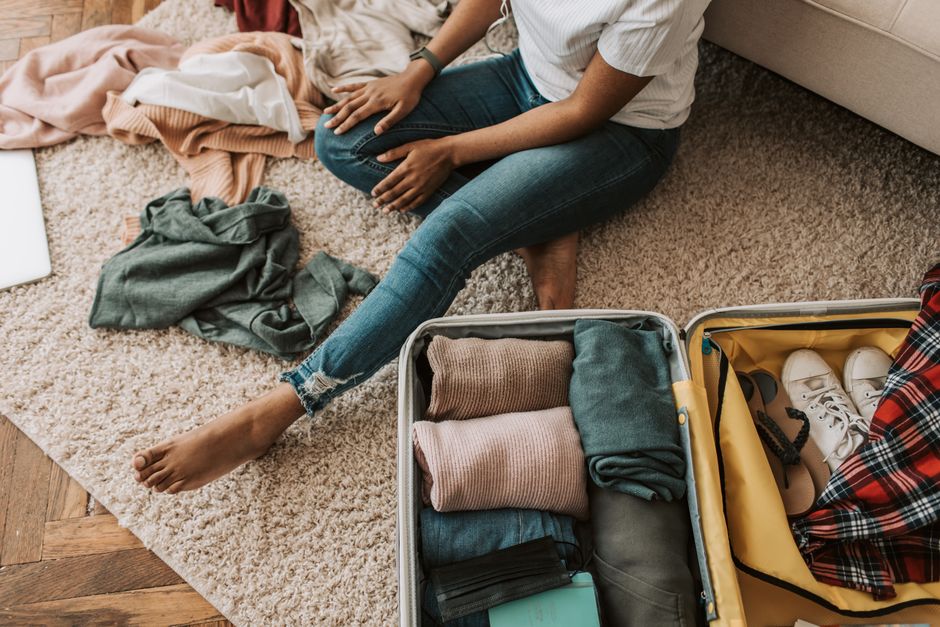
Pack five days of combinations, not five complete outfits. Choose a two-color base, then add one accent color. Navy, black, grey, olive, and cream mix easily and hide light marks from long walking days.
Use this compact clothing formula
| Item | Quantity | Useful specification | Why it earns space |
|---|---|---|---|
| Base tops | 3 | Short-sleeve or 150-200 gsm merino | One worn, two packed; easy to rotate |
| Warm layer | 1 | Fleece, cardigan, or 200 gsm merino | Handles cool mornings and trains |
| Outer layer | 1 | Packable shell with a hood | Protects against wind and light rain |
| Bottoms | 2 | One walking trouser and one alternate | Enough variety without extra bulk |
| Underwear | 6 sets | Five days plus one spare | Creates a buffer for delays |
| Socks | 5 pairs | Merino or quick-dry fabric | Reduces damp-foot problems |
Pick one proven warm layer
The Uniqlo Ultra Light Down Jacket is a strong choice when mornings are cold but your bag is small. The listed model uses 750-fill down, has a pocketable design, and was shown at $49.90 on the US product page when checked. It works best under a rain shell; its water-repellent finish is not a substitute for waterproof fabric.
For travelers who dislike down or want one layer that works indoors, choose a 200 gsm merino top such as the Icebreaker Merino 200 Oasis Long Sleeve. It costs more than a basic cotton shirt, but it resists odor and can serve as both a base layer and sleep top. The verdict: choose the Uniqlo jacket for maximum warmth per gram, and merino for repeated wear.
Which shoes, day bag, and tech deserve space
One comfortable walking shoe should do most of the work. Five-day city breaks often mean 15,000 to 25,000 steps on several days, so a second pair only earns space if the first pair gets wet easily or you need formal shoes for a planned event.
Choose the walking shoe before choosing outfits
Wear the shoes you will walk in on the flight and test them for at least two weeks before departure. The Allbirds Tree Runners are a reasonable lightweight option for dry city trips, but their breathable upper is a poor match for persistent rain. For wet pavements, a leather sneaker with a sealed tongue or a low hiking shoe makes more sense.
Do not pack brand-new shoes. Blisters cannot be solved by adding more socks once you are four hours into a museum district. Pack blister patches, five pairs of socks, and a thin pair of foldable flats only when your itinerary includes an evening dress code.
Keep the day bag between 10 and 15 litres
The Osprey Daylite holds 13 litres and was listed at £70 on the UK product page checked for this guide. That is enough for a water bottle, compact shell, sunglasses, wallet, power bank, and a small snack without encouraging you to carry your whole suitcase every day.
Carry only one charging solution
A 10,000 mAh power bank is enough for most phones during a long sightseeing day. The Anker Nano Power Bank has 30W charging, a built-in USB-C cable, and a listed UK price of £39.99 when checked. Bring one phone cable, one wall charger, and a plug adapter if your destination uses a different socket. Three spare cables are clutter, not preparation.
How to divide the packing list across five days
Pack by function, then assign outfits
- Travel day: Wear your walking shoes, heaviest trousers, base top, warm layer, and shell if the airport forecast is cold. Pack one complete backup outfit in your carry-on.
- Day two: Use the first base top with your alternate trousers. Add the warm layer in the morning and remove it after lunch if the temperature rises.
- Day three: Wear your second base top with the main walking trousers. This is the best day for a long outdoor route because your cleanest socks are still available.
- Day four: Repeat the warm layer with the remaining clean top. If anything is damp, wash it in the hotel sink before bed and hang it near moving air.
- Day five: Wear the least bulky clean combination and keep your shell accessible for the journey home. Leave one spare underwear set untouched until you reach the airport.
Use a small laundry reset
Wash one or two lightweight items on the third night instead of packing a full outfit for every day. Use hotel soap, rinse twice, press the garment inside a towel, and hang it over a chair rather than a heated radiator. Merino, nylon, and thin cotton dry faster than heavy denim.
Keep worn clothing in one washable bag. Clean clothing belongs in a packing cube or one side of the suitcase. This separation stops you from unpacking every item to find a fresh pair of socks.
Leave deliberate empty space
Reserve about 15% of your carry-on for food, a pharmacy purchase, or a warmer layer you no longer want to wear. A bag filled to its zipper before departure becomes a problem when rain forces you to pack a wet shell. Empty space is part of the plan.
Should you buy anything before this trip?
Do I need a new suitcase?
No, not if your current bag fits the airline’s published cabin dimensions and rolls smoothly. Measure it with wheels and handles included. A 55 x 40 x 20 cm limit is common, but airlines set their own rules, so check the booking page before buying luggage.
Is a packing cube worth buying?
Buy one medium cube if your suitcase becomes messy, not a six-piece set by default. A cube around 30 x 20 x 10 cm can hold tops and underwear without turning into a rigid block. Compression cubes help bulky sweaters but can make a bag heavier and encourage overpacking. For this trip, one regular cube and one laundry pouch are the better choice.
Should I pack an item tracker?
If you check a bag or carry expensive equipment, an Apple AirTag can add useful backup. Apple says it uses a replaceable CR2032 battery that lasts more than a year under normal conditions, but it requires an iPhone or iPad ecosystem. Android travelers should choose a tracker compatible with their phone. Do not treat a tracker as luggage insurance; it helps locate a bag but cannot recover it for you.
Buy a new jacket, shoe, or bag only when your current item fails a specific test: it cannot handle the forecast, it causes pain after a long walk, or it exceeds the carry-on limit. The most useful upgrade is the one that removes a known problem.
The single most important takeaway: pack a three-layer clothing system, one trusted walking shoe, and enough empty space to handle weather changes.