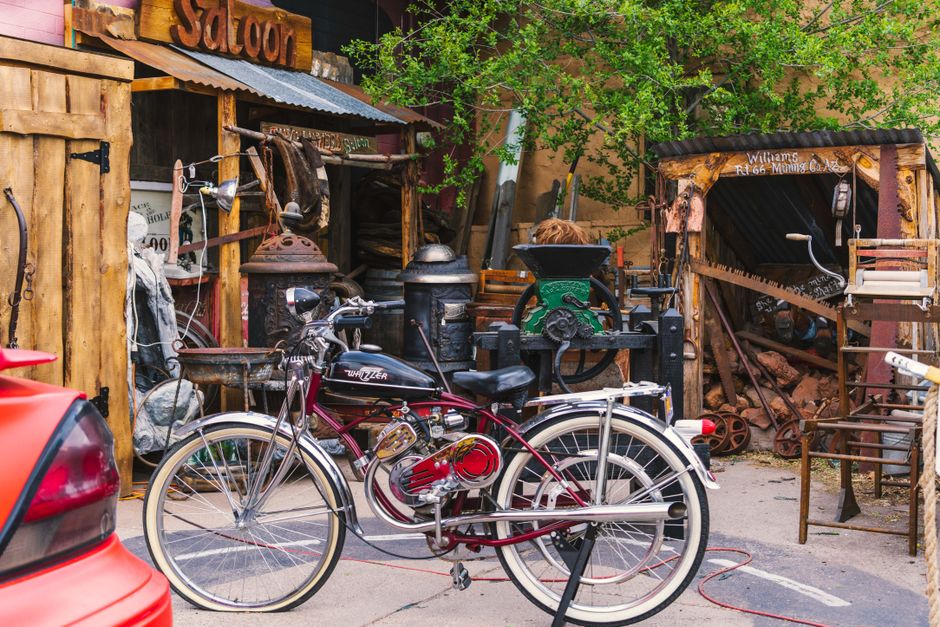
The High Road from Santa Fe to Taos is only about 105 miles, yet the trip can take four to seven hours once you stop in mountain villages, galleries, churches, and overlooks. That gap is the point: this is not a fast transfer between two cities. It is a route where the stops define the experience.
The best plan is a three-night loop: begin in Santa Fe, drive the High Road to Taos, spend enough time in Taos to avoid treating it as a lunch stop, and return by the Low Road through Española. No New Mexico statute is interpreted here; this is travel-planning information only. This is not legal advice — consult a licensed attorney. Check current road conditions, weather alerts, rental-car terms, and posted restrictions before departure.
How many days should a Santa Fe and Taos road trip take?
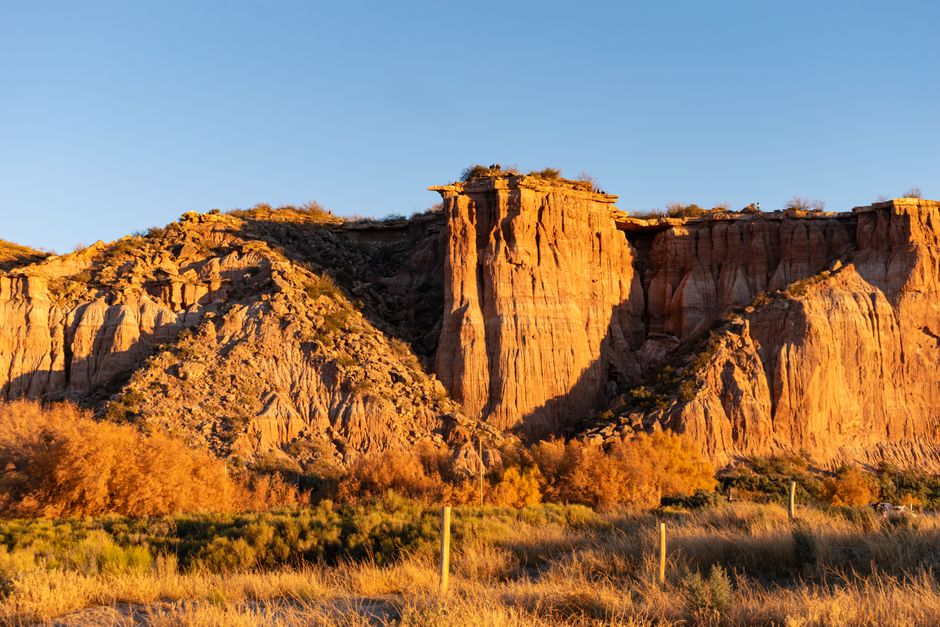
Three nights is the minimum that makes this route feel deliberate. Use the first night for Santa Fe, where a full day allows time for the Plaza, Canyon Road, the Railyard, and one museum or historic site; use the second night for Taos, because arriving late and leaving early reduces the town to a postcard; and use the third night in Santa Fe or a midpoint chosen for rest, since the return through Española and the Low Road is easier when it is not forced into a long airport-transfer day.
Two nights can work if the trip is mainly a scenic drive, but the compromise is clear: you will have to choose between Santa Fe depth and Taos depth. Four or five nights is the stronger choice for travelers adding Bandelier National Monument, a second Taos day, or a detour toward the Enchanted Circle. The winning schedule is not the one with the most named stops; it is the one that leaves daylight for unplanned weather, a closed gallery, a slow meal, or a village road that deserves more than a passing glance.
For most first-time visitors, I would book Santa Fe for two nights and Taos for one or two nights. That split gives the cities enough time to stand on their own while preserving the High Road as a scenic transition rather than an obligation.
What mistakes ruin this New Mexico road trip?
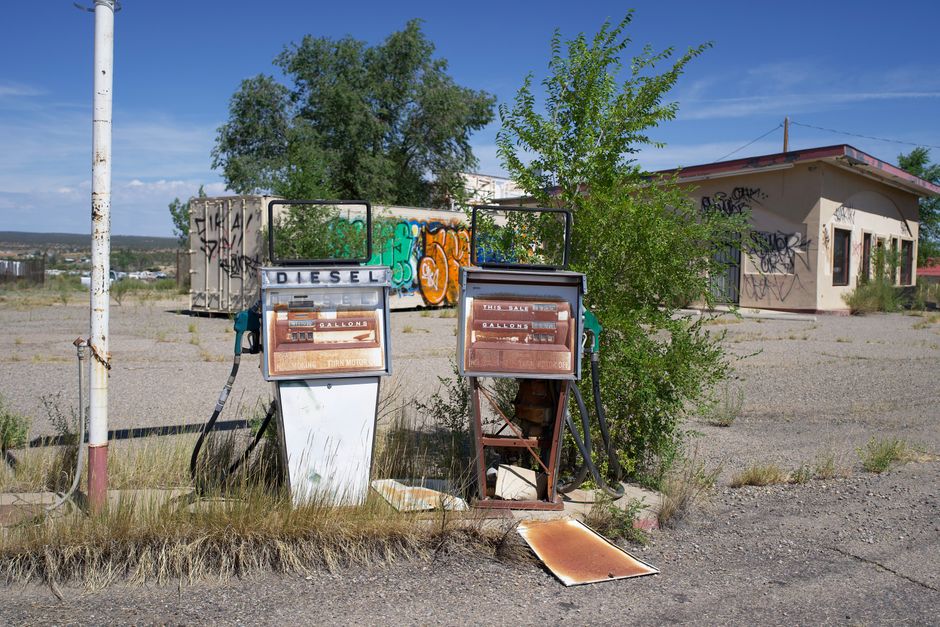
The most common failures are planning failures, not destination failures. These are the mistakes I would actively avoid.
- Trying to drive the High Road in two hours. The no-stop driving estimate does not include village parking, church visits, meals, photography, or roadwork. A rushed schedule turns the route into a stressful transfer and leaves no margin for a slow vehicle or a weather hold.
- Assuming every historic building is open to visitors. Churches, studios, galleries, and community spaces may have limited hours, seasonal schedules, or rules that protect active religious use. Check local information before promising a specific interior visit. Respect signs, private property, and photography restrictions.
- Ignoring entrance fees and payment rules. Bandelier National Monument lists a $25 private-vehicle pass, a $20 motorcycle pass, and a $15 individual pass, with the standard pass valid for seven days. The park also advises visitors to plan for cashless payment. Confirm the current details on the National Park Service Bandelier fees page before adding the park to the itinerary.
- Renting the smallest possible car without checking conditions. A low sedan may be comfortable in Santa Fe but less reassuring on snow, rough shoulders, or a narrow mountain road. A large SUV creates its own problems: more fuel use, harder parking, and a wider body on tight streets. Choose enough clearance and traction for the forecast, not a vehicle chosen only by its daily rate.
- Treating Taos Pueblo as an ordinary sightseeing stop. Taos Pueblo is a living Indigenous community with its own visitor rules, closures, and photography policies. Verify access directly and follow the rules without argument. The cultural experience is stronger when visitors arrive prepared to observe rather than demand a particular photo or timetable.
One more failure mode deserves attention: booking the return flight too close to the final mountain drive. If your trip ends in Albuquerque, Santa Fe, or another airport, keep a buffer. A road trip with no recovery time is vulnerable to one closure, one flat tire, or one genuinely good lunch that runs long.
Which rental car and park-pass choices make sense?
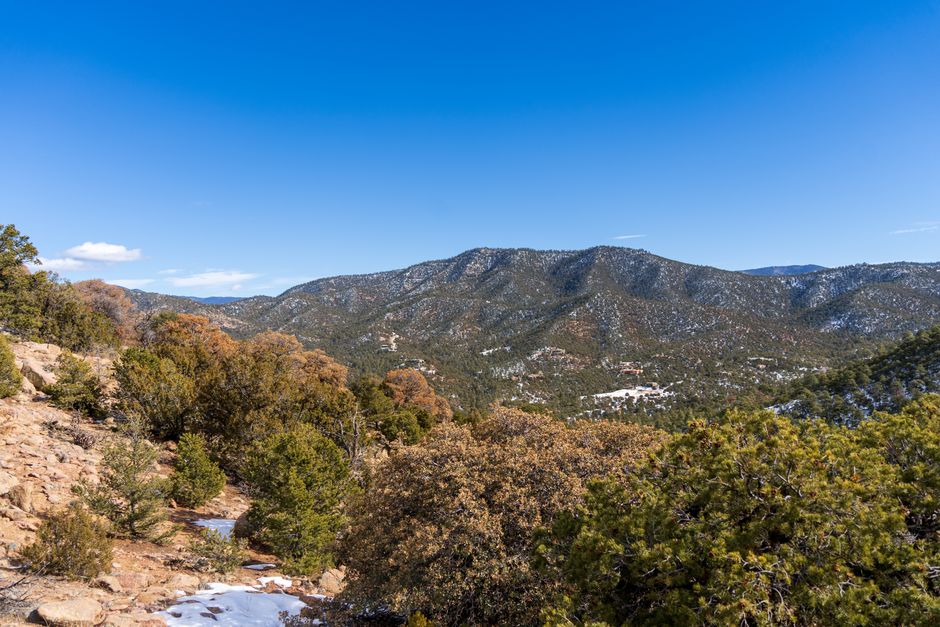
For this route, I would choose a compact or midsize crossover with all-wheel drive when winter weather is possible, and I would skip an oversized SUV. The best practical pick is a Toyota RAV4 Woodland or a Subaru Outback because both provide useful clearance without making Santa Fe parking unnecessarily difficult. An electric vehicle can work, but only when charging locations are mapped in advance and the driver accepts that cold, elevation, cabin heat, and detours reduce the usable range.
Is the 2026 Toyota RAV4 a good fit?
The 2026 Toyota RAV4 offers 8.1 inches of ground clearance on several trims and 8.5 inches on the Woodland grade, according to Toyota’s published specifications. That is adequate for paved highways, normal shoulders, and light weather exposure. The Woodland trim also has a 2.5-liter hybrid powertrain and a Trail drive mode, but those features do not turn a rental car into an off-road vehicle. My verdict: choose the RAV4 Woodland when you want efficient fuel use and modest extra clearance, but do not pay a premium for it if the forecast is dry and the standard crossover class already meets the rental company’s terms.
Is the 2026 Subaru Outback the better winter choice?
The 2026 Subaru Outback lists 8.7 inches of ground clearance on most trims and up to 9.5 inches on the Wilderness trim. That extra clearance and standard all-wheel-drive setup make it my strongest winter recommendation for this itinerary. The tradeoff is size: the Outback is longer than a small crossover, so tight historic-district parking may take more attention. My verdict: select the Outback when snow, ice, or rough roadside conditions are realistic, especially if the rental contract includes suitable tires and roadside assistance.
Should you rent a Ford Mustang Mach-E?
The 2026 Ford Mustang Mach-E lists EPA-estimated ranges from 240 to 320 miles depending on trim, battery, and drivetrain. That range looks generous, but the High Road is not the place to improvise a charging plan. A cold-weather detour or a charger that is occupied can consume the margin quickly. My verdict: rent the Mach-E only if you can identify reliable charging in Santa Fe and Taos, confirm the charger connection with the rental company, and keep enough battery for the return route. For a first visit, a gasoline or hybrid crossover is the lower-stress choice.
Which pass should you buy for Bandelier?
For one Bandelier visit, the $25 private-vehicle pass is usually the cleaner choice. For several federal recreation sites during the year, the 2026 America the Beautiful annual pass is listed at $80 for U.S. residents and $250 for nonresidents. Those prices can change under federal policy, so verify them before paying. The pass is useful only when the planned sites accept it; it does not replace local parking fees, reservations, or access rules. For this specific Santa Fe–Taos loop, buy the annual pass only if Bandelier is part of a wider national-park travel year.
The category is moving toward smarter route planning: live road data, clearer vehicle information, and better charging maps will reduce some of the old uncertainty. The landscape will still reward the same discipline, though. Leave daylight for the mountains, time for the villages, and enough flexibility for New Mexico to set the pace.