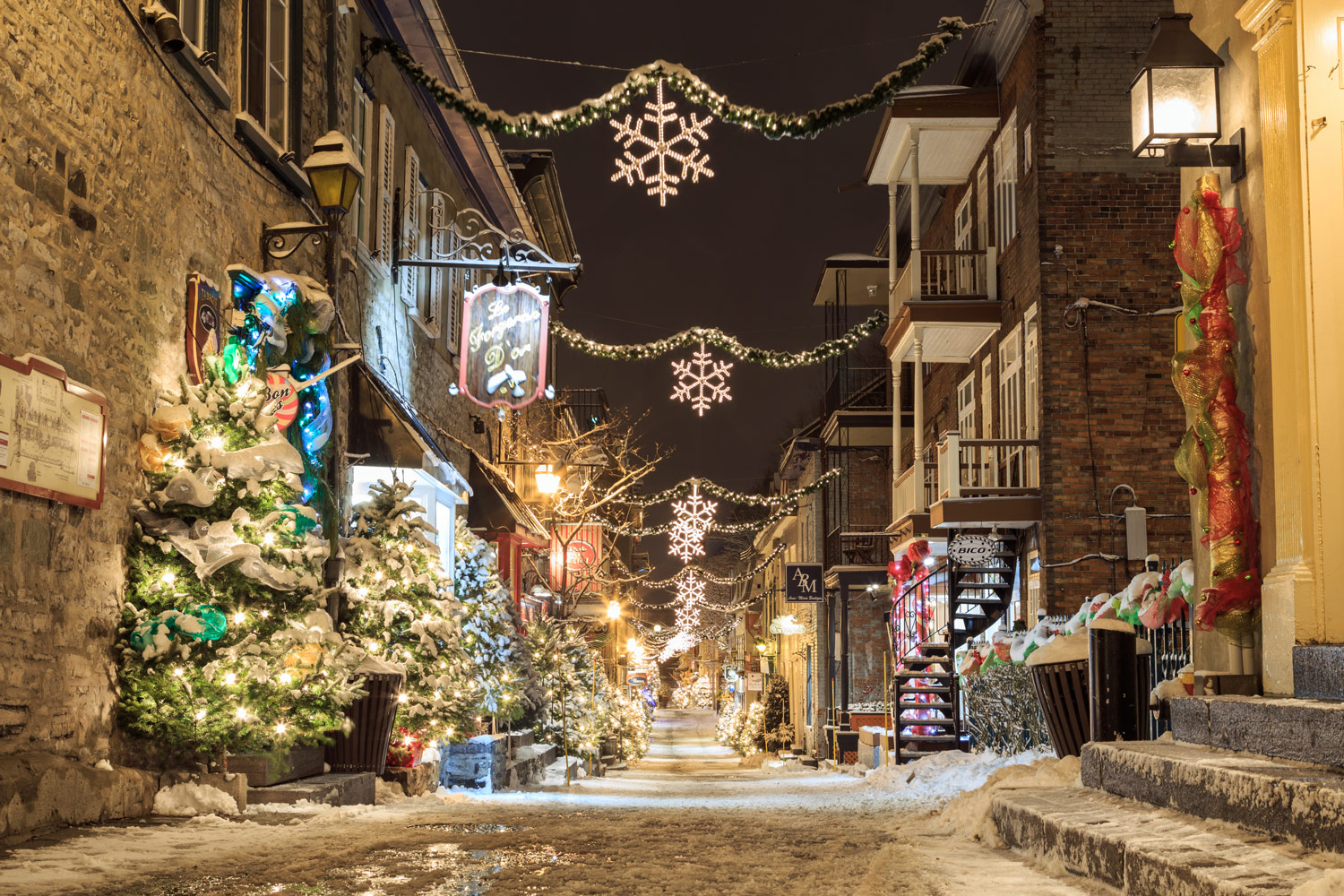
Most people hear “Quebec in winter” and imagine a punishment — brutal cold, empty streets, and a trip you’ll regret booking. That’s the wrong frame entirely. Quebec City is one of the few places on earth that built its identity around winter rather than against it. The cold is real. But the infrastructure, the events, and the culture treat it as a feature worth selling tickets to.
Here’s what a week in Quebec winter actually looks like — with specific temperatures, gear recommendations, real prices, and the honest trade-offs that tourist brochures leave out.
The “Too Cold to Visit” Myth, Debunked
Quebec City winters are cold. January averages around -12°C during the day and drops to -18°C at night. Some years push colder — -25°C during wind chill is not rare. But cold is not the same as unenjoyable. Chicago hits the same temperatures, and nobody tells you not to visit Chicago in January.
What makes Quebec different is that the city was physically designed for winter foot traffic. Heated indoor markets, restaurants with working fireplaces, covered walkways, and a culture that treats snow as scenery rather than inconvenience. People ski during lunch breaks here. School children toboggan on the Plains of Abraham before class. The city does not close for winter — it sells tickets to it.
Monthly Temperature Guide
| Month | Avg High (°C) | Avg Low (°C) | Snowfall (cm) |
|---|---|---|---|
| December | -4 | -12 | 50 |
| January | -9 | -18 | 55 |
| February | -7 | -16 | 50 |
| March | -1 | -9 | 45 |
How Quebec Cold Compares to Other Cities
Montreal gets similar temperatures but feels worse because of wind tunnels between downtown skyscrapers. Minneapolis averages colder than Quebec City in January. Oslo in December is actually colder when you factor in damp maritime air. Quebec’s dry continental cold is the most manageable version of extreme cold — your layering system works exactly as designed, and the snow stays powdery rather than turning to wet slush the moment you step outside.
The Infrastructure That Makes It Work
Petit-Champlain, the historic shopping street at the base of the cliff, strings thousands of lights across its narrow lanes all winter. Restaurants along Rue Saint-Jean keep outdoor terraces running with overhead heaters. The Terrasse Dufferin boardwalk overlooking the St. Lawrence stays open and well-maintained through February. None of this is accidental — it’s the result of a city that chose to compete on winter experience rather than wait for summer to arrive.
Quebec Winter Carnival: What’s Actually Worth Attending
The first weekend is the only part of the Quebec Winter Carnival worth scheduling your entire trip around. The event runs for roughly two weeks in late January and early February, drawing hundreds of thousands of visitors to what genuinely is the largest winter carnival in the world. But the spectacle concentrates in those first four days — the opening ceremony, the night parade, the ice sculptures reaching peak completion. By week two, the energy drops and the lineups stay long.
The entry wristband for general Carnival access runs about $20 CAD. Most of the best events — the canoe race, the ice sculptures, Bonhomme’s Ice Palace on the exterior — are free to observe without it.
Events Worth Planning Around
The ice sculpture competition at Place Desjardins produces genuinely remarkable work — multi-story figures carved from five-tonne ice blocks over four days. The canoe race across the St. Lawrence River is unlike anything else in North America. Teams of five paddle and drag their canoes through chunks of floating ice for about 45 minutes while thousands watch from the Terrasse Dufferin boardwalk above. Free to watch. One of the most unusual sporting spectacles on the continent.
Le Défilé de nuit — the Night Parade — runs on the first Saturday with illuminated floats and marching bands performing at -15°C. Dress for standing still in that temperature for 90 minutes, not for walking. Bonhomme’s Ice Palace near Parliament Hill is smaller than it looks in photographs but still earns a 20-minute walk-through.
What You Can Skip
The daytime parade runs slower and produces far less visual impact than the night version. The official Carnival drink — Caribou, a mix of red wine and high-proof spirits — is worth trying once, but the lines at official kiosks run 30 minutes. Buy it at any bar on Grande-Allée instead. And the Bonhomme character meet-and-greet lines hit 90 minutes on weekends. Unless you’re traveling with young children, that time is better spent at the ice sculpture site or the canoe race.
Best Winter Activities in Quebec City and Surroundings
The Carnival covers one week. Quebec’s winter activity calendar runs November through late March, and it’s genuinely dense. Here’s what’s available, what it costs, and who each activity actually suits.
| Activity | Location | Cost (CAD) | Best For |
|---|---|---|---|
| Tubing and snow slides | Valcartier Vacation Village (30 min from city) | $40–$55/day | Families, first-time snow visitors |
| Alpine skiing | Mont-Sainte-Anne (40 min from city) | $75–$100/day lift ticket | Intermediate and advanced skiers |
| Cross-country skiing | Parc National de la Jacques-Cartier | $10–$20/day | Hikers wanting a winter alternative |
| Ice skating | Place D’Youville, downtown Quebec City | Free (skate rental $10) | Everyone — ideal first-night activity |
| Snowshoeing | Mont-Sainte-Anne or Parc des Champs-de-Bataille | $20–$35 rental | Non-skiers who want outdoor time |
| Hôtel de Glace visit or overnight | Valcartier Vacation Village | $25 day visit / $450–$700 overnight | Bucket-list experience seekers |
| Dog sledding | Various operators, Stoneham area | $80–$150/person | Couples, bucket-list travelers |
Mont-Sainte-Anne: The Underrated Ski Mountain
Mont-Sainte-Anne deserves a full dedicated day. It runs 71 trails across a vertical drop of 625 meters, with night skiing available five days a week. Day lift tickets cost $85–$100 CAD — cheaper than Whistler and dramatically less crowded than Tremblant. The on-mountain rental shop stocks modern Rossignol and Head ski packages at reasonable day rates. If you ski and you’re visiting Quebec City, skipping Mont-Sainte-Anne is a genuine mistake.
The Hôtel de Glace Experience
Valcartier Vacation Village rebuilds the Hôtel de Glace from scratch every single winter — 15,000 tonnes of snow and 500 tonnes of ice, carved into rooms, a chapel, and a full bar with ice glasses. The $25 day-visit ticket gets you inside to see the carved rooms and ride the ice slide. Sleeping there overnight ($450–$700 per room) means a sleeping bag rated to -30°C on a bed carved from ice. Most guests sleep fine. The experience is unlike anything in a conventional hotel — which is either the whole point or a dealbreaker, depending on how you travel.
Walking Old Quebec in Winter: Mistakes Most Visitors Make
Do You Actually Need Special Boots?
Yes. Without negotiation. Old Quebec City sits on top of a cliff, which means steep cobblestone streets that become skating rinks by January. Regular winter boots with flat rubber soles don’t work here. You need aggressive tread: the Sorel Caribou ($190–$220 CAD, rated to -40°C) or the Kamik Nation Plus ($130 CAD, also rated to -40°C) are the practical standards. If you own boots that aren’t grippy, pick up Yaktrax Run traction cleats ($30 CAD) — they slip over any boot and completely change what the icy staircases feel like underfoot.
The single most common complaint from first-time winter visitors in Quebec City: “I slipped on the steps near Château Frontenac and it ruined my afternoon.” It’s completely avoidable. Don’t skip the footwear.
Are Most Attractions Open in Winter?
Most of them, yes. The Musée de la Civilisation, the Musée national des beaux-arts du Québec, and the Citadelle of Quebec all operate year-round. The Fortifications of Quebec trail stays accessible throughout winter. A handful of specialty shops in Petit-Champlain close in January and reopen in March, but core restaurants and most shops stay open. The Plains of Abraham function as a groomed cross-country ski trail in winter — which is arguably more interesting than their flat, empty summer version.
What Is the Biggest Navigation Mistake?
Underestimating the climb between Lower Town — the Petit-Champlain area — and Upper Town around Château Frontenac. The funicular runs constantly and costs $4.50 CAD each way. Use it going up, walk the Breakneck Stairs down if conditions allow. Attempting to power-walk those stairs upward in full winter gear is exhausting and icy in equal measure. Dozens of visitors try it every day and regret the decision halfway.
Where to Stay When It’s -20°C Outside
Stay inside the Old City walls — that’s the only accommodation advice that matters here. The Fairmont Le Château Frontenac runs from $350 CAD per night in winter, roughly 30% cheaper than summer rates. Boutique options like Auberge Saint-Antoine come in at $200–$280 per night and are equally well-positioned. Staying outside the walls means cold taxi rides back every evening when you could walk to everything in under five minutes.
What to Pack for a Quebec Winter Trip
Most packing lists for Quebec winter say “warm coat and gloves” and stop there. That’s not sufficient. Here’s the gear that actually matters, with specific products and approximate CAD prices.
Your Clothing System
- Base layer — merino wool only: The Icebreaker 200 Oasis long-sleeve ($120 CAD) regulates temperature as you cycle between heated restaurants and -15°C streets. Cotton fails this entirely — it holds sweat against your skin and chills fast.
- Mid layer — insulated vest or jacket: The Canada Goose Hybridge Lite Vest ($395 CAD) is the premium pick. The Arc’teryx Cerium Vest ($350 CAD) runs slightly warmer per gram. Either packs small enough to stuff into a daypack when you’re inside eating lunch.
- Outer shell — windproof and waterproof: The Arc’teryx Beta AR jacket ($900 CAD) is the best in this category. If that’s outside your budget, the Columbia Whirlibird IV interchange jacket ($320 CAD) handles Quebec winters reliably without complaint.
Footwear and Accessories
- Boots: Sorel Caribou or Kamik Nation Plus, as covered above. Size up half a size to fit thick wool socks properly.
- Socks: Darn Tough Merino Wool full-cushion ($30 CAD per pair). Two pairs minimum — one on, one drying.
- Gloves: Two pairs. Thin liner gloves for phone use; heavy insulated mittens for extended outdoor time. The Hestra Fall Line mittens ($160 CAD) are overkill-good. The Black Diamond Mercury mittens ($90 CAD) are the practical pick.
- Hat and balaclava: The Buff Merino Wool Heavyweight Balaclava ($55 CAD) rolls up to a beanie and unrolls to full face coverage — one item that handles both situations.
The Items Most Lists Forget
- Hand warmers: HotHands single-use packs ($15 CAD for 10) last 10 hours in a coat pocket. Non-negotiable for the canoe race or any extended outdoor Carnival spectating where you’re standing still in -15°C wind.
- Sunglasses with UV protection: Snow glare is aggressive and underestimated. Your regular sunglasses work fine. For skiers, the Oakley Flight Jacket ($200 CAD) handles both the mountain and the city.
- Lip balm with SPF: Cold air, wind, and sunlight bouncing off snow destroy lips faster than a beach trip. The Sun Bum SPF 30 lip balm ($7 CAD) handles it. Small item, large difference over a five-day trip.
December, February, or March: When to Actually Go
The timing question has a real answer. Here’s what each month delivers.
| Month | Crowd Level | Key Events | Avg Temperature | Best For |
|---|---|---|---|---|
| December | Moderate, rising toward Christmas | Christmas markets, Petit-Champlain lights | -4°C to -12°C | First-time winter visitors, holiday atmosphere |
| January | Low pre-Carnival, rising late month | Quebec Winter Carnival (late January) | -9°C to -18°C | Carnival attendees who want fewer crowds |
| February | High during Carnival peak | Quebec Winter Carnival (early February) | -7°C to -16°C | Full winter immersion, peak experience |
| March | Low | Maple sugarbush season (mid-month onward) | -1°C to -9°C | Cold-averse travelers, maple season fans |
The Case for Early February
Go in early February if you want the complete Quebec winter experience. The Carnival is at peak energy, reliable snow covers every surface, the Hôtel de Glace at Valcartier is fully built and open, and Mont-Sainte-Anne has its best snow of the season. Yes, hotel prices jump 20–30% compared to January and crowds are higher. That premium is worth paying for what you actually get in return.
When March Makes More Sense
Cold-sensitive travelers — or anyone dragging along a partner who doesn’t love extreme temperatures — should aim for mid-March instead. The city goes quiet, temperatures climb toward zero, ski resorts stay fully operational (Mont-Sainte-Anne often runs into April), and maple syrup season starts in the surrounding countryside. A stop at a sugar shack — Cabane à sucre Constantin or Érablière du Lac-Beauchamp — runs $20–$35 for a full traditional meal with unlimited maple products poured hot over fresh snow. It’s one of the best food experiences Quebec offers in any season, and most winter travel coverage barely mentions it exists.