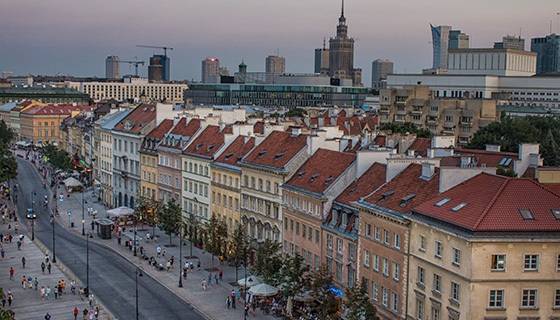
Here’s the question most people researching this city are actually asking: can you live a normal, comfortable life in Warsaw, or is it just a place you pass through on the way somewhere else?
The answer is more interesting than most travel blogs admit. Warsaw isn’t just tolerable — for the right person, at the right time, it punches well above its reputation. But “the right person” matters, and that’s what this guide is actually about.
Which Warsaw Neighbourhood Actually Fits Your Life?
Pick the wrong neighbourhood and Warsaw will feel exhausting. Pick the right one and you’ll wonder why you didn’t come sooner. The city has distinct pockets — each with different costs, energy, and types of residents — and they don’t blend as much as you’d expect. The choice you make in week one shapes your entire experience.
| Neighbourhood | 1-Bed Rent (PLN/month) | Vibe | Best For | Key Downside |
|---|---|---|---|---|
| Śródmieście | 3,800–5,500 | Central, walkable, busy | First arrivals, expat community | Noise, tourist density |
| Mokotów | 2,800–4,000 | Residential, green, calm | Families, 6-month+ stays | Less walkable in outer sections |
| Praga-Północ | 2,200–3,200 | Gritty, artsy, authentic | Budget-conscious long stays | Patchy infrastructure |
| Żoliborz | 2,600–3,800 | Quiet, leafy, intellectual | Remote workers, couples | Sparse nightlife and dining |
| Wola | 3,000–4,800 | Modern, corporate-oriented | Business workers, short stays | Soulless in patches, still developing |
Śródmieście: Best Entry Point, Rarely a Forever Home
Śródmieście is where most expats land first. You’re within walking distance of the Old Town, Nowy Świat street, the Central Station, and most metro stops. Finding a furnished apartment is easiest here — Otodom.pl lists hundreds of options, with one-bedrooms running 3,800 to 5,500 PLN per month (roughly $950–$1,375 at current rates).
After two or three months, many people migrate. Bar noise from Plac Zbawiciela runs late on weekends. Summer tourists are omnipresent. The centre is good for getting oriented — less good as a permanent base for anyone who values quiet mornings or space to think.
Praga-Północ: Warsaw’s Best Deal Right Now
Praga sits on the east bank of the Vistula — historically working-class, now genuinely compelling. Rents for a decent one-bedroom land at 2,200–3,200 PLN, which is 30–40% below the Śródmieście equivalent. The Soho Factory complex, the Neon Museum, and a growing cluster of independent coffee shops and natural wine bars have given it real cultural weight that the polished west bank can’t replicate.
Some streets still flood in heavy rain, and parts feel genuinely unfinished. For stays of three months or more, though, Praga delivers the most neighbourhood character per zloty. Search Otodom.pl filtered to Praga-Północ and you’ll find furnished apartments that would cost twice as much across the river.
Mokotów and Żoliborz: For People Who Stay
Both are quiet, green, and populated by Warsaw’s professional class rather than its nightlife crowd. Mokotów is bigger and more varied — some streets feel like proper residential Europe, others drift suburban. Żoliborz carries a slightly literary atmosphere: academics, older families, independent bookshops. Rents in both areas sit mid-range and the streets stay walkable without becoming tourist zones.
For anyone spending three months or more in Warsaw, these two beat the centre on livability without sacrificing much on day-to-day convenience.
What Living in Warsaw Actually Costs
Warsaw isn’t the bargain it was in 2019. Rents rose sharply after 2026, partly driven by population shifts and a hot local property market. But it’s still considerably cheaper than Berlin, Amsterdam, or Copenhagen for equivalent quality of life. Here’s an honest month-by-month breakdown.
Monthly Budget for One Person: Line by Line
- Rent (1-bed, mid-range area): 2,800–3,800 PLN (~$700–$950)
- Groceries: 600–900 PLN (~$150–$225) — Biedronka is the value option; Lidl stocks better wine and cheese; Piotr i Paweł runs 20–30% more expensive and is best treated as an occasional splurge
- ZTM monthly transport pass: 110 PLN (~$27) — covers the full metro, tram, and bus network citywide
- Eating out (lunch daily, dinner 3x/week): 800–1,200 PLN (~$200–$300)
- Phone plan (unlimited data): 30–50 PLN/month — Play and Plus both offer competitive unlimited plans in this range
- Coworking desk: 600–1,200 PLN/month — Brain Embassy charges around 800 PLN for a hot desk with coffee and community events; WeWork Varso Tower runs closer to 1,200 PLN with better facilities and views
- Utilities (if not bundled into rent): 300–600 PLN/month, noticeably higher November through March
Total realistic monthly budget: 5,100–7,600 PLN ($1,275–$1,900). That covers a comfortable one-bedroom in a residential neighbourhood, daily lunches out, public transport, and a coworking membership. Not poverty mode. Not luxury. A normal European life at a material discount to the west.
Two Things That Change the Grocery Equation
Żabka convenience stores appear on nearly every block in central Warsaw. They’re genuinely useful at midnight but priced 20–30% above supermarket rates — never use them for weekly shopping. Hala Mirowska, the open-air market near Mirów, runs Tuesday through Saturday and sells local produce, cheeses, and bread at prices that match Biedronka with significantly higher quality variation.
Tip: Warsaw tap water is safe to drink and tests well consistently. Buying bottled water here is a habit, not a health decision. Drop it and save 50–80 PLN per month without noticing.
Getting Around Without Owning a Vehicle
The ZTM monthly pass at 110 PLN is one of Warsaw’s clearest bargains. Two metro lines and an extensive tram network cover most of the city reliably. Veturilo bike-sharing stations are citywide — free for the first 20 minutes, then 2 PLN per additional 20-minute increment. The Jakdojade app handles route planning in English and integrates all transit modes without needing a Polish SIM to set up.
For late nights or rain, Bolt averages 15–25 PLN per city-centre trip. Uber operates at similar rates. Both cost a fraction of equivalent rides in London or Amsterdam.
Tip: if your apartment is in Śródmieście, Mokotów, or Żoliborz, going fully car-free is straightforward. Outer Wola is the exception — parts of it still rely on infrequent bus connections that test patience.
The Infrastructure Verdict
Warsaw’s metro runs clean and on time. Cafe wifi handles video calls without drama. Contactless payment works at street markets, bakeries, and tram stops. The daily infrastructure most people actually use functions at a level that surprises arrivals expecting Eastern European chaos — the city rebuilt itself from near-total wartime destruction and clearly decided to do it properly. What doesn’t function well is the bureaucratic layer underneath: PESEL registration, NFZ health insurance enrollment, and banking paperwork in Polish all require either a local contact or a high tolerance for frustration via translation apps that sometimes fail on legal language.
The Downsides Nobody Writes Into the Highlight Reel
Warsaw’s enthusiasts are vocal. The problems below are real, consistent across long-stay accounts, and worth knowing before you sign anything.
Winter Is Not a Minor Inconvenience
Warsaw averages around 1,600 hours of sunshine per year. Lisbon gets 2,800. Berlin gets 1,800. Between November and March, overcast skies are the norm, not the exception. December daylight runs to roughly 8 hours — and much of that sits under cloud cover. Temperatures hover between -5°C and 5°C for weeks.
This is the single most common reason people cut Warsaw stays short. Some people manage it with daylight therapy lamps and deliberate social scheduling and do fine. Others find that the grey accumulates in ways they didn’t anticipate by January. If you already notice seasonal mood shifts at home, Warsaw winter is a real risk — not something to plan around with optimism and a good coat.
Air Quality Spikes in Cold Snaps
Older Warsaw residential buildings still use coal heating, and PM2.5 readings can spike well above WHO guidelines during winter cold snaps. The IQAir app — which covers Warsaw in real time — shows multiple “Unhealthy” reading days each winter season. The city banned the worst-polluting furnaces in 2018 and progress is measurable, but the problem hasn’t been solved.
For most residents, this means checking the app before outdoor runs and occasionally skipping exercise. For people with asthma, young children, or respiratory conditions, it’s a more serious calculation that should happen before committing to a year-round base here.
The Polish Language Wall in Official Contexts
Day-to-day social Warsaw works fine in English. Most people under 40 manage it, restaurant menus are often bilingual, and the expat community is large enough to be socially self-sufficient. The wall appears in official settings: lease disputes, banking setup, NFZ paperwork, utility registrations. None of this is impossible to navigate, but all of it demands either Polish-language assistance or patience with translation tools that sometimes produce legally meaningless results.
Nightlife Is Concentrated, Not Ambient
Outside the central bar strips near Nowy Świat and Chmielna, and Praga’s small cluster of late-night venues, Warsaw quiets down fast after 10pm. Parts of Mokotów and Żoliborz are empty at night — not unsafe, just silent. The city has a genuine nightlife scene, but it’s clustered on specific streets rather than diffuse across neighbourhoods. If street life at all hours is what makes a city feel alive for you, Warsaw will require a deliberate adjustment period.
Warsaw vs. Kraków, Prague, and Vilnius: Which City Fits Your Situation?
Should You Choose Kraków Instead?
Kraków is smaller, more compact, and historically richer — the Old Town is genuine medieval architecture, not postwar reconstruction. Rents average 10–20% lower. The student population keeps prices down and concentrates nightlife in Kazimierz in a way that feels livelier for short stays.
Warsaw wins on scale. The tech sector, corporate job market, and professional networking are significantly larger. For remote workers this matters less — both cities have the infrastructure for it. For anyone seeking Polish employment or building a professional network in finance, law, or consulting, Warsaw is the necessary choice, full stop.
Is Prague Actually Better Value Now?
Prague used to be the obvious budget alternative to Western European capitals. That window has mostly closed. A one-bedroom in Prague’s Vinohrady or Žižkov now runs 18,000–26,000 CZK per month ($775–$1,120) — comparable to mid-range Warsaw. Prague’s city centre also carries significantly higher tourist density year-round, making it genuinely worse to live in despite being more photogenic to look at.
Prague wins on architecture and walkability. Warsaw wins on lower tourist saturation, a stronger tech economy, and better international connectivity. LOT Polish Airlines runs direct routes from Warsaw to most major European cities multiple times daily — check the route map before assuming Prague has better connections.
Tip: if you’re deciding between Warsaw and Prague purely on cost, run the numbers for your specific neighbourhood tier. The gap is smaller than people assume.
What Does Vilnius Offer That Warsaw Doesn’t?
Vilnius is cheaper — a decent one-bedroom in Žvėrynas or Antakalnis runs 700–1,000 EUR per month — and the city feels genuinely undiscovered in a way Warsaw stopped being around 2026. The downside is scale and connectivity: far fewer direct international flights, a smaller expat community, and an economy that doesn’t offer Warsaw’s range of professional opportunity or the same density of infrastructure.
For people who want a city that rewards slow exploration and patience, Vilnius is compelling. For people who want full European city infrastructure at a real discount to Western Europe — immediately, without adjustment — Warsaw is the stronger answer.
Warsaw rewards the people who stay past the first impression, and in 2026 that still means getting a real major European city at a price the west stopped offering a decade ago.