Three small delays can erase your first afternoon: a 20-minute reception queue, a dead phone battery, and a room problem that takes 30 minutes to fix. The damage is larger than the clock suggests. You lose daylight, restaurant bookings, museum entry times, and the energy to explore. Good hotel check-in habits work like a risk-control plan: remove the delays you can predict, then keep a backup for the ones you cannot.
Which check-in strategy protects the most afternoon time?

The strongest strategy depends on your arrival window, but the ranking below gives a firm starting point. The key measure is not comfort inside the hotel. It is how quickly you can leave the property with your essential items secure.
Compare your arrival window before booking the first activity
| Lobby arrival | Best check-in move | Safe first activity | Main risk |
|---|---|---|---|
| Before 1 p.m. | Ask about luggage storage and early room access | Nearby café, market, or park | Room is not ready |
| 1 p.m. to 3 p.m. | Complete registration and leave bags if needed | Walk within 20 minutes of the hotel | Waiting for a text or key |
| 3 p.m. to 5 p.m. | Go directly to the room, inspect it, then unpack only essentials | Late museum entry or dinner reservation | Housekeeping delay |
| After 5 p.m. | Prioritize access, food, and a shower | Local dinner or short evening walk | Fatigue and transport delays |
The strongest default is a two-stage arrival
For most travelers, the winning plan is two-stage: secure the luggage first, then begin a low-risk nearby activity while the room is prepared. This beats sitting at reception because it keeps the afternoon moving without creating a second transport problem. If the hotel promises a room by 2:30 p.m., do not build a 3 p.m. timed ticket around that promise. Leave at least 45 minutes of slack for a key-card issue, a missing crib, or a room change.
Use a hard cutoff for waiting
Choose the point at which you stop waiting. Fifteen minutes is reasonable for a quick key handoff. Thirty minutes without a clear update is a signal to ask for a bag-storage receipt and leave. This is the right consumer position: a vague promise has little value, while a documented return time gives you control.
How to prepare before reaching the hotel
A good arrival routine starts before the taxi reaches the entrance. Keep the sequence short enough to follow when tired. The aim is to prevent three predictable failures: missing reservation details, inaccessible essentials, and a first activity that collapses when the room is late.
Use this seven-step pre-arrival routine
- Confirm the check-in window. Check the reservation for the official time, late-arrival rules, and luggage-storage policy.
- Send one useful message. Ask for early access if needed, state your arrival time, and request written confirmation of any extra charge.
- Save the reservation offline. Keep the hotel name, address, booking number, and payment status in a phone note or screenshot.
- Pack a first-hour pouch. Put medication, a phone cable, tissues, hand sanitizer, a small snack, and one clean top in an outer pocket.
- Choose one nearby fallback. Pick a café, public garden, market, or lobby with seating no more than 20 minutes from the hotel.
- Set the activity threshold. Do not book a timed attraction until you know the actual room or luggage situation.
- Check the route twice. Compare the airport route with the hotel-to-fallback route. A closed street or a large station can add more time than expected.
Keep essentials out of checked luggage
The first-afternoon kit should stay with you, not inside a suitcase that the hotel stores behind the desk. Medication, passports, chargers, contact lenses, and one weather-appropriate layer belong in a personal bag. If the room is delayed, you can still eat, walk, or enter a casual attraction without reopening your luggage.
Do not turn preparation into a second job
Overplanning creates its own failure mode. You do not need six backup restaurants and a minute-by-minute route. One flexible plan, one nearby fallback, and one hard waiting cutoff cover most arrival problems. The best preparation is the part you can remember after a red-eye flight.
Hotel check-in questions travelers ask before the first afternoon

These questions matter because hotel policies vary by property, city, and room type. Ask directly and record the answer when it affects money or timing.
Can a hotel guarantee early check-in?
Only if the property confirms a guaranteed early check-in as a booked service or written promise. A note saying “early arrival requested” usually means staff will try if a suitable room is clean. Ask for the exact guaranteed time, fee, and cancellation rule. If the charge is large, compare it with the value of a nearby day room or airport lounge. For a morning arrival after a long flight, guaranteed access can be worth paying for; for a noon arrival, luggage storage usually offers better value.
Should you tell the hotel about a late arrival?
Yes, especially at a small property, an independent inn, or a hotel with limited overnight reception. Send the expected arrival time through the booking channel and keep the response. Ask how to collect the key if the desk closes. This prevents a locked entrance from turning a normal delay into an overnight problem.
What should you inspect before leaving the room?
Check that the door locks, the air-conditioning or heating works, the bathroom has hot water, and the room matches the booked bed type. Look for obvious damage and photograph it if needed. Report urgent problems before heading out. A missing towel can wait; a broken lock, strong leak, or unsafe window cannot.
The small travel products that make check-in faster
My clear recommendation: pack for a 15-minute room setup, not a perfect unpacking session. The right gear reduces searching, charging, and bag-reopening time. It should support the arrival plan, not become another collection of gadgets to manage.
Choose one carry-on layout that keeps essentials visible
The Away Bigger Carry-On measures about 22.7 by 15.7 by 9.6 inches and weighs about 7.8 pounds. Its split interior can keep a first-hour pouch separate from clothing, but the case is too large for some regional airline limits. For a strict cabin-bag route, a smaller case is the safer choice. The verdict: use the Bigger Carry-On for generous airline allowances and longer trips, but do not buy it solely for hotel arrival convenience.
Track the bag only if you understand the limit
An Apple AirTag is about 32 millimeters wide and weighs about 11 grams. It can help confirm that checked luggage reached the airport, but it cannot make a delayed bag arrive faster and it does not replace the airline’s baggage process. Put it inside the case rather than attaching it where it can fall off. For travelers making a tight connection, tracking adds useful information; for a single direct flight with a small personal bag, it may add little.
Carry one charger with enough output
The Anker 511 Charger, also sold as Nano 3, supplies up to 30 watts through USB-C in a compact wall plug. That is enough for many phones, tablets, and some lightweight laptops, but check your computer’s required wattage before relying on it. A Peak Design Tech Pouch, roughly 24 by 15 by 10 centimeters, can hold the charger, cable, adapter, and earbuds together. The practical verdict is to choose one compact charging kit, label its cable, and keep it in the personal bag so a delayed room never means a dead phone.
What to do when the check-in plan breaks
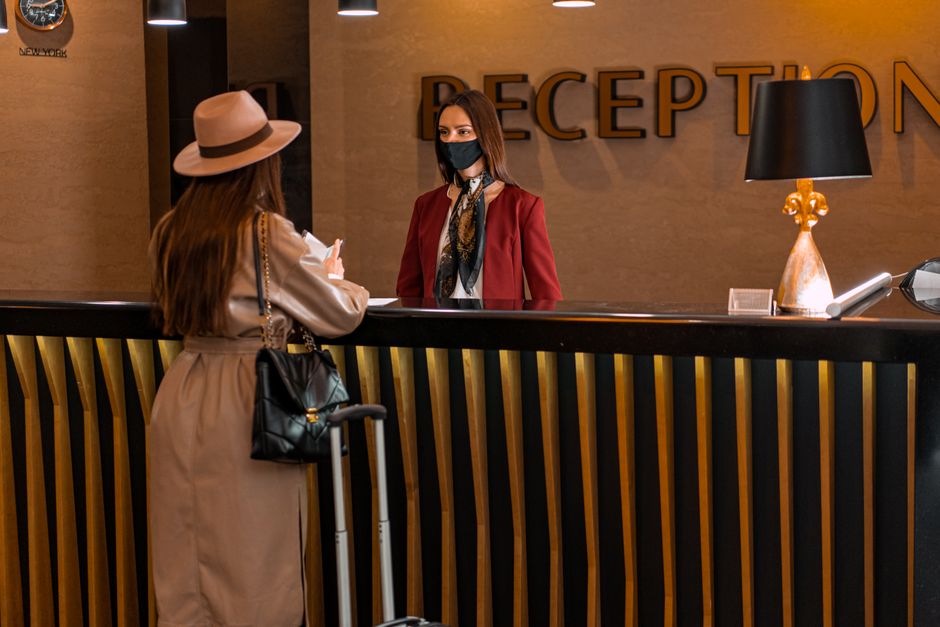
Even a careful routine can fail. A room may be sold incorrectly, a transfer may arrive late, or the front desk may give an unclear answer. The response should be calm but specific. Ask for a remedy that protects time, not just an apology.
When the room is not ready at the promised time
Ask three questions: What is the new ready time? Can the hotel store the bags securely? What alternative room type is available now? If the promised time has passed, request a concrete option such as access to a comparable clean room, a temporary room for changing, or a revised plan with a named staff contact. Do not accept “soon” as the full answer. A time and a person are more useful than a general reassurance.
When the room has a serious problem
For a minor issue, report it and continue with your afternoon. For a broken lock, flooding, strong smoke odor, no functioning bathroom, or a room that does not match the booking, pause and request a move before leaving. Photograph the problem and keep messages in the booking channel. If you paid for a specific room feature, ask how the hotel will correct the mismatch. This is a consumer-risk rule: document the condition before the evidence disappears.
The final verdict for a protected first afternoon
Secure bags quickly, carry essentials personally, set a waiting cutoff, and choose an activity close to the hotel. Those four habits do more for your first afternoon than an ambitious sightseeing schedule. As hotels add mobile keys, luggage robots, and timed arrival systems through 2026, the useful standard will remain simple: less time negotiating access, more time enjoying the place you came to see.