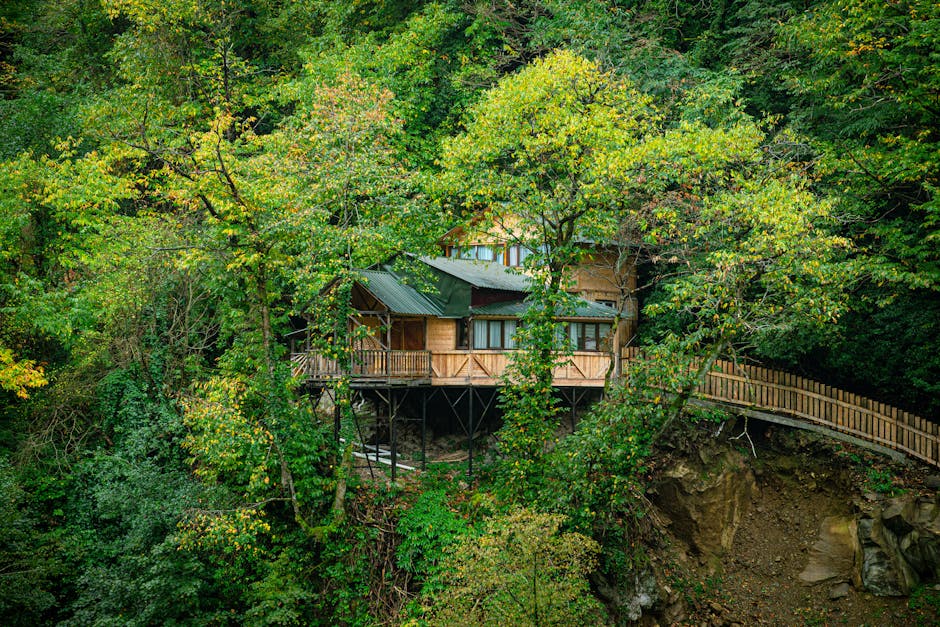
Are the “eco-friendly” hostels across Southeast Asia actually doing something different — or are they charging you extra for a recycling bin and a bamboo headboard?
Most are greenwashing. A smaller number are doing genuinely impressive things. Several of those cost under $25 a night, sometimes well under. The challenge is telling them apart before you book.
This covers what real eco certification looks like, which specific hostels deliver on it, what you give up, and when the whole category isn’t worth chasing.
This is not financial advice. Prices and availability change — verify directly with properties before booking.
What “Eco-Friendly” Actually Means at a Southeast Asia Hostel
The phrase “eco-friendly hostel” carries no legal weight in any Southeast Asian country. A property can add it to their Hostelworld listing with a single checkbox. No audit follows. No fine comes if they’re lying. This matters because your purchasing decision — and your actual environmental impact — depends entirely on whether there’s substance behind the label.
Genuine sustainability at a budget hostel comes down to three measurable things: verified third-party certification, operational infrastructure (not just aesthetics), and documented community impact. If a hostel can’t point to at least two of these, the label is marketing copy.
Third-Party Certifications That Actually Mean Something
Four certifications are worth trusting in this region:
- Green Globe — audited annually against 44 core criteria covering energy, water, waste, and community engagement. Active in Thailand, Vietnam, and Bali. Their global directory at greenglobestandard.com is publicly searchable and free to check.
- Travelife — the benchmark most European tour operators require from partner accommodation. A rigorous two-stage process. Around 70+ Southeast Asia properties hold it — a small fraction of total inventory.
- EarthCheck — uses regional benchmarking rather than a static global checklist, meaning a Thai property is compared against Thai properties, not European ones. More contextually accurate than blanket standards.
- Thailand’s Green Leaf — a GSTC-recognized national program backed by the Thailand Tourism Authority with annual audits. The certification Lub d Bangkok works toward, and one of the few national programs with real teeth in the region.
If a hostel can’t name one of these when you ask, treat their eco claim as unverified. The question “which third-party certification do you hold?” takes three seconds to send via WhatsApp before booking. Their response — or non-response — tells you everything.
What Operational Sustainability Actually Looks Like
The difference between a greenwashing hostel and a real one shows up in infrastructure costs, not in how the lobby looks. Real sustainability requires capital expenditure:
- Solar or renewable energy covering 30–50%+ of electrical load
- Rainwater harvesting or greywater recycling systems
- Commercial composting — not just “we compost sometimes”
- Local supplier agreements with documented sourcing percentages
- Community employment programs with local wage floor commitments
These systems cost $3,000 to $15,000 to install. A hostel that has invested in them talks about them in specific terms — kWh saved, liters recycled, percentage of local staff. One that lists “bamboo furniture” as its primary eco credential has not made that investment.
The Bamboo Aesthetic Trap
Bamboo walls, rattan lamps, a succulent on the front desk. This look has become the visual shorthand for eco-friendly accommodation across the region. It costs maybe $800 to style a lobby this way. A functioning rainwater system costs $5,000+. When a property’s entire sustainability story is visual, treat that as a red flag — not a green one.
Some of the most aggressively “eco-aesthetic” hostels in Chiang Mai and Bali run diesel generators for 10+ hours daily because the local grid is unreliable. The look is curated. The emissions are real.
Bottom Line: Ask for the certification name before you book. Travelife or Green Globe means someone audited the claim. Anything else requires independent verification on your end.
Verified Eco Hostels Under $25/Night: The Real Numbers
These properties have documented sustainability programs, third-party credentials (or credible in-progress certifications), and dorm bed prices confirmed in early 2026. All prices in USD at peak-season dorm rates.
| Hostel | Location | Dorm Price/Night | Eco Credential | Key Practice |
|---|---|---|---|---|
| Lub d Bangkok | Bangkok, Thailand | $18–22 | Green Leaf Certified | Solar-assisted water heating, greywater recycling, documented local sourcing |
| Mad Monkey Siem Reap | Siem Reap, Cambodia | $8–12 | Community Impact Program | Funds local school, 90%+ local staff, full single-use plastic elimination |
| Mad Monkey Phnom Penh | Phnom Penh, Cambodia | $9–13 | Community Impact Program | Local sourcing standards, Mekong conservation partnership, same chain accountability |
| Onederz Hostel | Siem Reap, Cambodia | $9–14 | Local community focus | 100% local staff, farm-sourced breakfast at $2, composting kitchen |
| Vietnam Backpacker Hostels | Hanoi / Hue / HCMC | $10–16 | Travelife (in progress) | Single-use plastic elimination, composting, local guide employment programs |
Two things stand out. Cambodia dominates the value column — Mad Monkey and Onederz sit in the $8–14 range, which is 40–50% cheaper than comparable certified options in Thailand. Vietnam Backpacker Hostels is mid-process on Travelife, meaning their credential is real but not yet fully audited. A property worth monitoring in 2026, but book with that caveat in mind.
Rucksack Caratel in Singapore holds Green Globe certification and runs a genuine sustainability program — but charges $35–50/night for dorms. Mentioned here because it’s the only fully certified eco-hostel in Singapore worth recommending, and because it illustrates exactly where the $25 ceiling breaks down by country.
Bottom Line: For the clearest eco-value under $25, Mad Monkey Siem Reap at $8–12/night is the pick. For the most rigorously certified option at the top of the budget, Lub d Bangkok at $18–22/night.
Four Booking Mistakes That Cost Travelers Real Money
These aren’t hypothetical. They show up repeatedly in forum threads and review patterns across the region.
- Booking fan-only eco dorms without checking the heat index. Many certified eco-hostels run fan-only dorms as part of their energy reduction strategy. In Bangkok, Ho Chi Minh City, or Phnom Penh between March and May, overnight heat indexes regularly hit 34–38°C. A fan-only dorm at $12/night becomes a private with AC at $22/night. That’s a $10/night surprise that compounds fast across a week-long stay. Check the amenities tab or message the property before booking any eco hostel in lowland cities during hot season.
- Trusting OTA eco badges without verifying the source. Hostelworld, Booking.com, and Agoda all allow properties to self-select “eco-friendly” or “sustainable” in their listing settings. None of these platforms audit the claim. A hostel can tick the box and collect the badge in two minutes. Cross-reference any eco claim against Green Globe’s public directory or Travelife’s certified partner list before trusting a third-party badge that a third party didn’t actually award.
- Optimizing for nightly rate without factoring in location cost. A $9/night dorm 7km from central Siem Reap means $5–8/day in tuk-tuk fares to get anywhere. The $14 bed near Pub Street is actually cheaper for a four-night stay by $4–16 total. Calculate total daily cost — accommodation plus realistic transport — before assuming the lowest headline rate wins the math.
- Booking non-refundable eco activity packages without reading the terms. Several eco-hostels bundle accommodation with guided activities — mangrove kayaking, jungle treks, cooking classes — at a discounted combined rate. These packages are almost always non-refundable and operate under separate terms from the standard hostel booking. Booking 45–60 days out without checking the cancellation clause risks losing $40–80 if your itinerary shifts. Standard hostel cancellation terms do not cover bundled packages.
Bottom Line: The most expensive mistake is also the most common — trusting OTA eco badges without checking a certification registry. Two minutes of verification saves you from paying a green premium for nothing.
What You’re Actually Trading Away at a Certified Eco Hostel
The trade-offs at a real eco hostel are structural, not accidental. Anyone telling you sustainability comes with zero sacrifice is either staying at a resort or selling something.
The Comfort Constraints Are Built-In
Flow restrictors on showerheads reduce water consumption by 30–40% — and reduce your shower pressure by roughly the same margin. Hot water typically runs on a timer (often 6–10am and 6–9pm). Towels cycle every two to three days rather than daily. Air conditioning, where it exists, is frequently centrally managed rather than per-room, which means the 19°C dial you’d normally set at midnight isn’t available.
None of this is a malfunction. It’s the operational logic of a lower-impact property. Worth knowing before you arrive, not after.
The Advantages Most Reviews Don’t Mention
Eco-certified hostels skew toward an older, quieter traveler demographic. Mad Monkey properties specifically market to 25–35-year-olds rather than gap-year party crowds, and their house rules reflect it. If sleeping before 2am matters, the structural culture at eco-hostels is systematically better than at conventional budget party hostels in the same price bracket.
Local food sourcing at certified properties also produces noticeably better breakfasts. Onederz Siem Reap is consistently highlighted in reviews for a $2 farm-sourced breakfast that outperforms what most $6–8 hostel café breakfasts deliver elsewhere. That’s a real advantage worth pricing into your total daily cost.
Bottom Line: Lower water pressure, restricted AC, no daily towel service. Better food, quieter nights, more engaged traveler environment. If those trade-offs work for your travel style, certified eco hostels are worth seeking out. If they don’t, booking on value and location is also a legitimate choice — not a moral failure.
Which Countries Give You the Most for Your $25 Eco Budget
Is Cambodia the clear winner in 2026?
Yes — by a meaningful margin. Siem Reap alone has the highest concentration of community-focused hostels under $15/night with documented sustainability programs anywhere in the region. The USD-based economy removes currency friction for most Western travelers. Mad Monkey and Onederz both publish transparent figures on local employment percentages and supplier relationships. Cambodia is where your $25 ceiling goes furthest, and it’s not close.
Has Thailand gotten too expensive for certified eco stays?
For Bangkok, borderline. You’re hitting $18–22/night for Green Leaf-certified options like Lub d, which leaves almost no margin below the $25 ceiling. Chiang Mai stays competitive at $12–18/night with a handful of certified and near-certified properties. Pai and Koh Lanta have smaller eco-focused guesthouses below $20/night, but independent verification of their credentials is considerably harder. Thailand works if you’re based north of Bangkok or if Lub d’s certification standard matters enough to absorb the premium.
Where does Vietnam fit in the hierarchy?
Vietnam is the most price-stable market in the region. Hanoi, Hue, and Hoi An all have eco-conscious hostel options in the $10–16 range. The gap between self-reported and third-party verified is wider here than in Cambodia — Vietnam Backpacker Hostels is the clearest exception, with documented Travelife progress and more transparent reporting than most. Verify credentials more carefully in Vietnam than elsewhere before trusting any eco label.
Bottom Line: Cambodia first. Chiang Mai as a Thailand alternative. Vietnam if you verify. Singapore is outside the $25 budget for certified eco stays, full stop.
When an Eco Hostel Isn’t Worth Chasing
Skip the eco premium entirely if you’re staying two nights or fewer. The infrastructure trade-offs don’t become irrelevant — you simply don’t have enough nights for your reduced consumption to mean anything measurable.
More importantly: your environmental footprint across a two-week Southeast Asia trip is far more determined by flight choices than hostel certification. Taking a bus or overnight train from Hanoi to Hue instead of a budget flight saves roughly 60–70kg CO2e per person. That one decision outweighs two weeks of eco-hostel towel policies. Keep the trade-offs proportional to what actually moves the needle.
Travelife reported a 34% increase in certified Southeast Asia properties between 2026 and 2026. The $25 ceiling that currently boxes you into mostly Cambodia and lower-tier Vietnam cities may shift materially within two years as certification infrastructure matures and traveler demand continues to push the market away from aesthetics and toward accountability.