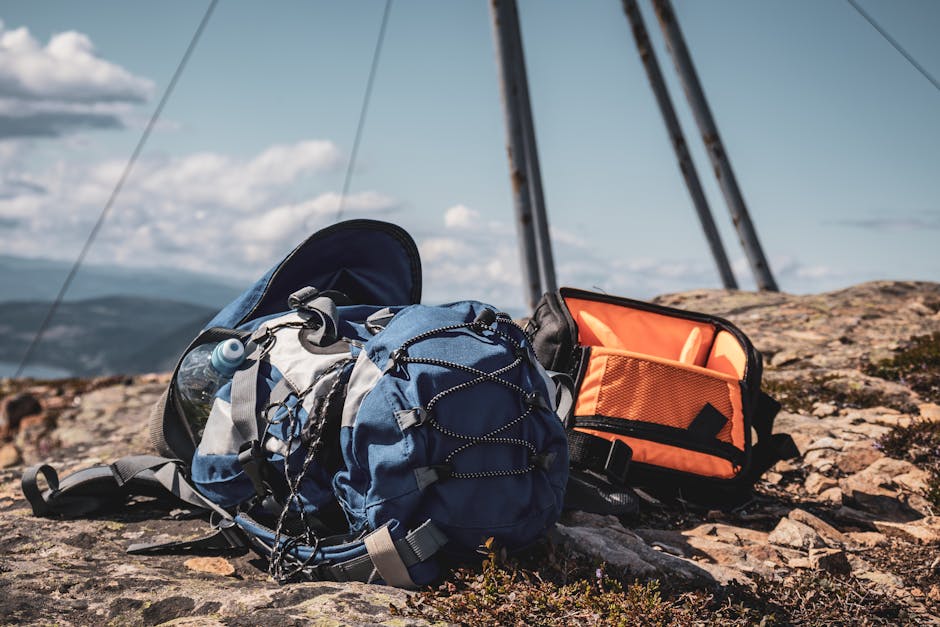
5 Carry-On Backpacks That Fit Every Airline Overhead Bin (2026)
Ryanair’s free personal item allowance is 40×20×25cm. That’s not a typo. It’s smaller than a standard laptop bag, and it catches thousands of travelers off guard every year — bags that pass easily on United, Delta, or Lufthansa get flagged (and charged €50–€80 in gate fees) on European budget carriers. Before spending $160–$300 on a carry-on backpack, you need to understand why airline policies are so wildly inconsistent, and what dimensions actually matter.
Why Airline Carry-On Policies Are More Chaotic Than You Think
The International Air Transport Association published a voluntary standard of 56×45×25cm years ago. The word “voluntary” is doing most of the work there. Fewer than half of major airlines follow it. Full-service carriers — Delta, Lufthansa, Emirates, Singapore Airlines — allow something close to the IATA recommendation and rarely measure bags at busy hubs. Budget carriers are a different reality entirely.
Ryanair’s paid cabin bag limit is 55×40×20cm. Wizz Air matches that, and their staff at Central European airports use physical bag sizers aggressively. EasyJet is more forgiving at 56×45×25cm. Spirit Airlines in the US allows 56×46×25cm. The gap between Ryanair and Spirit is enormous — and a bag that fits one will not fit the other.
What this means in practice: a bag that compresses to roughly 55×35×20cm passes virtually everywhere. A rigid-sided bag at 50×40×25cm will fail a strict Ryanair sizer even if it looks smaller.
The 7kg Weight Limit That Catches Most Travelers Off Guard
Asian budget carriers hit hardest on weight, not dimensions. AirAsia, Jetstar, Scoot, and IndiGo all cap carry-on bags at 7kg — and they weigh them at check-in. A fully packed 40L backpack with shoes, a 15-inch laptop, and a camera kit hits 8–10kg easily.
The math is straightforward: targeting a 7kg limit means your empty bag should weigh under 1.5kg to leave you 5.5kg for gear. The Osprey Farpoint 40 at 1.47kg empty just clears that threshold. The Peak Design Travel Backpack 45L at 1.84kg does not — you’re already 340g short before packing a single item. For a detailed breakdown of how a two-week kit actually distributes by weight and category, this warm-weather packing framework is worth working through before you buy.
Why Soft-Sided Bags Beat Hard Frames Almost Everywhere
A soft-sided backpack compresses into overhead bins that are partially full. A rigid roller does not. On regional turboprops in Southeast Asia, the Philippines, or parts of Latin America, overhead bins run small. Gate agents routinely ask passengers to check hard-sided carry-ons for free on these routes — a soft backpack gets stuffed in by force if needed.
Softness is also an advantage at security. The Nomatic Travel Pack 40L’s organized interior — dedicated compartments for electronics, cables, and a tablet — moves through x-ray screening faster than a single-compartment bag with everything piled together. On a tight morning connection, that’s a real difference.
The 5 Best Carry-On Travel Backpacks of 2026
These five bags all weigh under 2kg empty, all fit within mainstream international carry-on limits, and all have real travel track records — not just spec sheet credentials.
| Bag | Volume | Empty Weight | Dimensions | Price (2026) | Best For |
|---|---|---|---|---|---|
| Osprey Farpoint 40 | 40L | 1.47kg | 55×36×28cm | $160 | Most travelers — best overall value |
| Nomatic Travel Pack 40L | 30L–40L (expandable) | 1.68kg | 55×33×20–27cm | $299 | Digital nomads, tech-heavy packers |
| Cotopaxi Allpa 35L | 35L | 1.3kg | 53×34×22cm | $180 | Minimalists, frequent budget airline travelers |
| Peak Design Travel Backpack 45L | 35L–45L (compressible) | 1.84kg | 56×38×23cm | $299 | Photographers, gear-heavy travelers |
| Tortuga Setout 45L | 45L | 1.58kg | 56×38×25cm | $199 | Long-trip travelers who need maximum volume |
The Surprise Pick: Cotopaxi Allpa 35L ($180)
At $180, the Cotopaxi Allpa 35L is consistently underrated because 35L sounds small. It isn’t. The full clamshell opening — the entire front panel unzips flat like a suitcase — makes packing and unpacking faster and less frustrating than any top-loader at any price. At 1.3kg empty, it’s the lightest bag on this list. It fits every airline sizer, including Wizz Air, without negotiation. Build quality is solid: recycled materials, tight stitching, and a front panel that doesn’t flap awkwardly when open.
The one real tradeoff: no built-in laptop sleeve. If you carry a 15-inch MacBook Pro alongside your clothing, you’ll need a separate laptop sleeve, which adds a few dollars and a bit of bulk.
When the Peak Design Travel Backpack 45L ($299) Makes Sense
The heaviest bag on this list and tied for most expensive. Worth it for one specific use case: photographers. The Peak Design Camera Cube ($80, sold separately) drops into the main compartment and converts it into a padded camera compartment. No other carry-on backpack at this volume integrates camera storage this cleanly. The bag also compresses from 45L down to roughly 35L using internal cinch straps, changing its profile enough to pass stricter airline sizers. For everyone else, this bag is over-engineered and overweight.
Osprey Farpoint 40 vs. Nomatic Travel Pack 40L: What the Price Difference Actually Buys
The Osprey Farpoint 40 at $160 is the right bag for most travelers. That verdict comes first because the rest of this section is about the narrow exception. The Nomatic at $299 earns its premium — but only for a specific kind of traveler, and buying it for the wrong reasons is a $139 mistake.
The Farpoint 40 has been the default carry-on recommendation for budget-conscious international travelers since the early 2020s for solid reasons. The harness system includes a LightWire peripheral frame and load-lifter straps — genuine backpacking DNA that distributes weight across your hips and shoulders. On a 3-hour layover where you’re walking Terminal D looking for a gate change, this matters considerably. The Nomatic Travel Pack 40L, for all its organizational cleverness, has no frame and no hip belt. Fine for 45 minutes of walking. Fatiguing and uncomfortable after two hours.
The Farpoint’s main compartment is a clean rectangle with a padded 15-inch laptop sleeve and a floating back panel that zips away entirely when you check or store the bag. Front panel zip opens everything flat. Zero friction, zero cleverness required.
What it doesn’t have: useful organization for electronics. Three main compartments and a few pockets is it. If you travel with a laptop, a tablet, assorted USB-C cables, a portable battery, wireless earbuds, and a camera, you’ll dig through the main compartment multiple times per day and find it increasingly irritating.
This is precisely what the Nomatic addresses. It has 14 dedicated pockets: a rear-access 16-inch laptop sleeve (opens from the back panel, fast at security), a front tablet pocket, a magnetic water bottle holder that opens one-handed, a shoe compartment at the base, a key clip, a cable organization panel, and a luggage pass-through strap. The expandable design compresses to around 30L for strict airline sizers and opens to 40L when you need space on the return trip.
Back Comfort on Long Airport Days
Osprey wins this without debate. The LightWire frame and load-lifter straps come directly from Osprey’s trekking pack lineage — the Farpoint 40 is meaningfully wearable for a full day. The Nomatic’s back panel is padded foam and nothing else. It was designed for hotel-to-taxi-to-hotel travel, not continuous all-day carry. If your travel style involves long transit days, overnight buses, or extensive city walking with your bag, the Osprey’s comfort advantage is not marginal.
Durability and Warranties: Where Osprey’s Track Record Matters
Osprey’s All Mighty Guarantee covers any manufacturing defect for the lifetime of the bag. No receipt, no time limit, no questions. They repair or replace it. Nomatic offers a lifetime warranty on manufacturing defects as well, but user reports across travel forums consistently flag the locking zipper pulls wearing after 12–18 months of daily use. For occasional travelers using the bag a few times per year, this is irrelevant. For digital nomads who use their bag six days a week, the Osprey’s simpler construction and better long-term warranty track record tips the balance.
How to Pack Two Weeks into a 40L Backpack Without Checking a Bag
The bag matters less than the system. The right packing method makes even a modest 35L work for two weeks. The wrong method makes a 45L feel chronically full. Here’s what actually works:
- Lay everything out, then cut a third of it. For two weeks in one climate zone: 5 tops, 3 bottoms, 7 days of underwear and socks, 1 pair of shoes worn traveling. Merino wool items — the Smartwool 150 Base Layer Tee ($70) or Uniqlo’s merino crew ($40) — wear 2–3 times between washes, which reshapes the entire clothing math.
- Use packing cubes, not compression sacks. Compression sacks save cubic centimeters but destroy organization. Eagle Creek Pack-It Specter cubes ($30–$45 per set) keep categories separated and findable without unpacking everything at each new hotel.
- Shoes go in first, against the back panel, soles toward your spine. Pack clothes, cubes, and soft items around them. Weight stays close to your center of gravity, and the bag carries better on your back.
- Electronics live in the top compartment or a front-access pocket. Your laptop comes out at every security checkpoint, every time, in every country. If it’s buried under clothing, you lose 5 minutes at each screening. The Nomatic’s rear-access laptop sleeve is purpose-built for this. The Farpoint’s side pocket sleeve is nearly as fast.
- Liquids bag in an outer pocket. Always. This gets repeated in every packing guide for a reason: it’s still violated constantly by experienced travelers in a hurry.
- Leave 15% empty on departure. You will buy things. You will receive gifts. You will find a bottle of olive oil or a ceramic bowl you cannot abandon. Packing to 100% capacity on day one means paying baggage fees home.
A lightweight cable organizer — the Bagsmart Electronic Organizer ($25) works well — turns USB-C cables, charging bricks, and portable batteries into one flat findable pouch. Combine it with a single multi-country USB-C power adapter: a well-chosen USB-C PD adapter handles your laptop, phone, and camera from one plug and eliminates the bulky country-specific adapter stack entirely. For a broader look at what accessories genuinely save time on the road, this practical accessories breakdown covers the gear that actually earns its weight.
One underrated addition: a packable day bag. The Matador Freefly16 ($55) compresses to 80g and stuffs into its own pocket. Leave your main backpack at the hotel and explore cities without lugging 40L everywhere.
The Verdict
Buy the Osprey Farpoint 40 ($160) for most trips. Buy the Nomatic Travel Pack 40L ($299) only if you carry significant electronics and will genuinely use all 14 pockets every day. Buy the Cotopaxi Allpa 35L ($180) if you fly budget carriers regularly and want the lightest option that passes every airline sizer without stress. The $139 price jump from Osprey to Nomatic buys organization — not performance, not comfort, not durability.
| Category | Best Pick | Why |
|---|---|---|
| Best overall value | Osprey Farpoint 40 ($160) | Real suspension system, lifetime warranty, proven design |
| Best for digital nomads | Nomatic Travel Pack 40L ($299) | 14 pockets, expandable volume, luggage pass-through strap |
| Lightest option | Cotopaxi Allpa 35L ($180) | 1.3kg empty — lowest weight on this list, passes all airline sizers |
| Best for photographers | Peak Design Travel Backpack 45L ($299) | Camera Cube compatibility, compresses from 45L to 35L |
| Maximum volume | Tortuga Setout 45L ($199) | Best space-to-weight ratio for trips over two weeks |
| Best back comfort | Osprey Farpoint 40 | LightWire frame + load-lifter straps — genuinely wearable all day |
| Best for strict budget airlines | Cotopaxi Allpa 35L | 53×34×22cm fits Ryanair and Wizz Air sizers without stress |