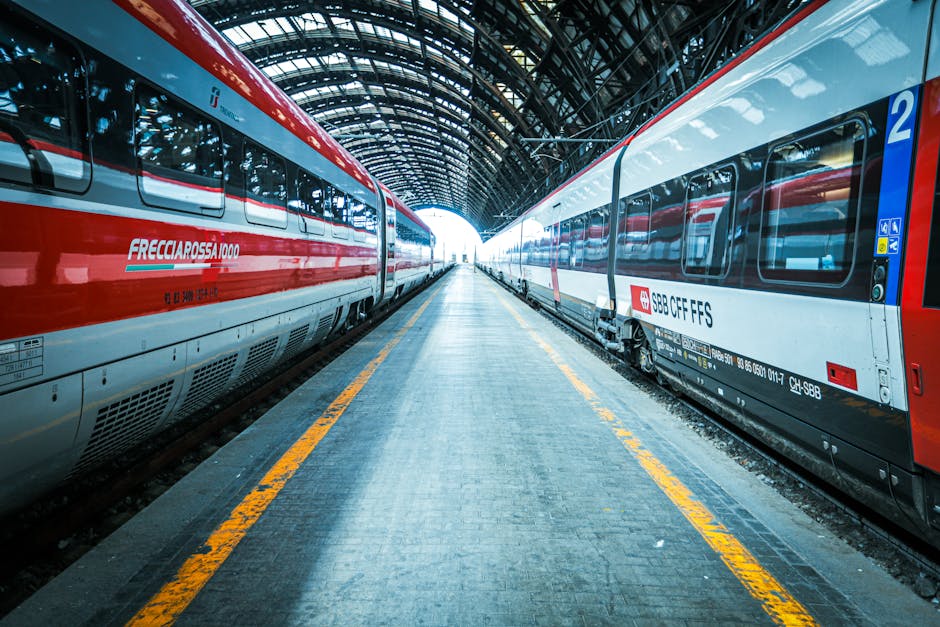
The most important decision in planning a European train trip happens before you open any booking website: whether to buy a rail pass or point-to-point tickets. Get this wrong and you can overpay by several hundred euros. Get it right and you will move across the continent smoothly, sometimes at a fraction of what equivalent flights cost door to door.
This is the booking process in order of decisions, not in order of what sounds appealing.
Pass or Point-to-Point: A Decision Table Before Anything Else
Most travelers ask the wrong first question. They ask which pass to buy when the correct question is whether to buy one at all. A rail pass makes mathematical sense under specific conditions: you are making five or more long-distance journeys in a short window, your itinerary crosses several national borders, and the routes you want do not carry steep mandatory reservations on top of the pass cost. Strip away any of those conditions and point-to-point tickets typically win on price.
| Itinerary | Pass Cost (approx.) | Point-to-Point (booked early) | Verdict |
|---|---|---|---|
| Paris → Amsterdam → Berlin → Prague → Vienna (10 days) | Eurail Global 5-day ~€325 | ~€280–€350 | Roughly equal; pass adds flexibility |
| London → Paris → Lyon (4 days) | Eurail 4-day ~€185 + Eurostar supplement | ~€130–€180 booked early | Point-to-point cheaper |
| 10 countries in 14 days, flexible dates | Eurail Global Continuous ~€545 | ~€600–€900 last minute | Pass wins clearly |
| Rome → Florence → Venice (6 days, Italy only) | Eurail 3-day + reservations ~€240 | ~€80–€140 on Trenitalia advance fares | Point-to-point wins significantly |
The Eurostar from London to Paris and Brussels charges a supplement for pass holders that currently runs between €30 and €50 per journey depending on class and availability. This is not a reservation fee — it is a mandatory supplement that meaningfully reduces any cost advantage a pass might offer on that corridor. Operators generally do not emphasize this in their marketing.
Who the Eurail Pass Actually Benefits
Non-EU residents planning multi-country itineraries over at least 10 days typically find pass value, specifically because they gain flexibility: the ability to change plans mid-trip without rebooking each leg. If your itinerary is locked before departure, that flexibility has no value, and point-to-point tickets bought at the 90-day mark will generally cost less.
Interrail Is Not the Same as Eurail
Interrail is the EU and EEA resident equivalent of Eurail, with similar pricing and nearly identical reservation fee complications. EU residents cannot buy Eurail; non-EU residents cannot buy Interrail. Both currently start around €185 for 4 travel days within a 1-month window. The pass structures are nearly identical — the eligibility is geographic, not functional.
The Booking Window That Determines What You Can Afford

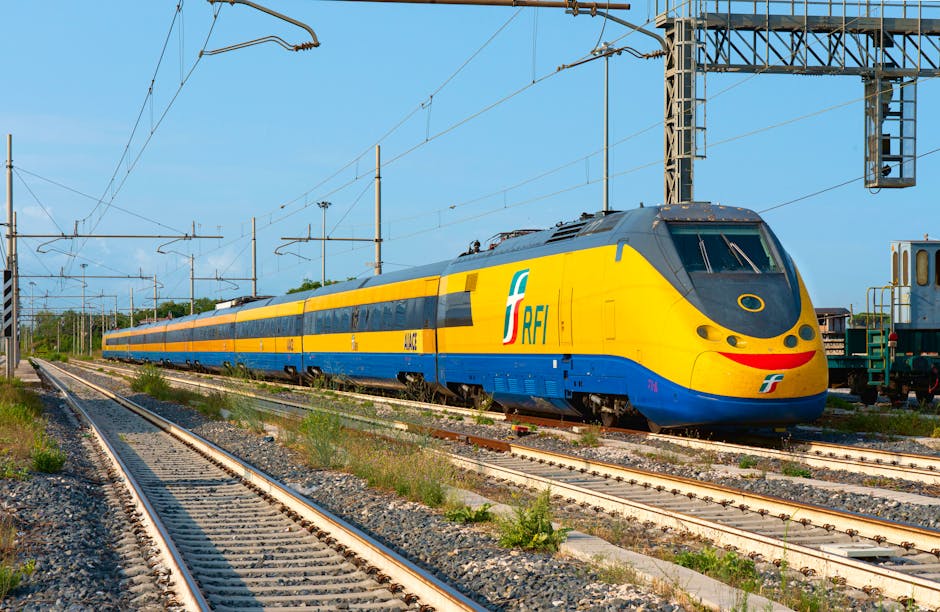
European high-speed rail operates on airline-style dynamic pricing. The cheapest fares on Eurostar, SNCF’s TGV, Trenitalia’s Frecciarossa, and Deutsche Bahn’s ICE trains go on sale roughly 90 to 120 days before departure, at prices that can be less than half the walk-up fare. By 30 days out, those fares are typically gone.
This is not a rule with exceptions. It is the standard operating model across most high-speed operators on the continent. SNCF opens its booking window at 90 days for most TGV routes. Deutsche Bahn opens at 180 days on many ICE services — meaning you can book a Frankfurt to Munich train six months in advance. Trenitalia opens at 120 days for Frecciarossa services between major Italian cities.
Regional trains operate differently. Slower regional services — the kind you might take from a small Swiss village into Zurich, or from a minor Spanish town into Barcelona — generally do not use dynamic pricing. Fares are often flat-rate, sometimes sold only at the station, and available right up to departure. Booking these months ahead offers no financial benefit and may not be possible through international platforms at all.
The 90-Day Booking Rule for High-Speed Trains
Treat 90 days out as your standard trigger for any high-speed journey that costs more than €60 at the full walk-up fare. On the most popular corridors — Paris to Lyon on a Friday in July, London to Paris during school holidays, Rome to Venice on a summer weekend — 90 days is not early. It is catching up. Plan accordingly.
For travelers who need some flexibility, SNCF’s TGV INOUI offers an exchangeable ticket tier that typically costs 15–25% more than the cheapest advance fare but allows date changes before the train departs. This is worth the premium if your plans have any chance of shifting.
Night Trains Follow Different Logic Entirely
Night train routes — including Nightjet services run by Austrian Federal Railways (ÖBB), the European Sleeper Amsterdam–Barcelona route, and ÖBB’s Vienna–Rome overnight — tend to have fixed pricing tiers rather than pure dynamic pricing, but popular dates sell out months ahead. A couchette on the Nightjet Vienna–Venice route currently runs €29–€79 depending on availability. A private sleeper compartment runs €99–€169 per person on the same route. These fares do not spike the way daytime high-speed fares do, but the inventory disappears steadily.
Routes Where Reservation Fees Make a Pass an Expensive Choice
This is what Eurail and Interrail marketing underemphasizes. A pass does not give you free travel on most high-speed trains. It gives you access to a seat at a mandatory reservation fee on top of the pass cost. Those fees accumulate fast on busy itineraries.
- Paris–Barcelona (TGV/AVE): Pass holders pay a mandatory reservation fee of €12–€39 per journey. At four crossings over a multi-week trip, that is up to €156 in fees alone.
- Paris–Milan (TGV): Reservation fee €12–€39. Some departure times have limited seat allocation for pass holders.
- Trenitalia Frecciarossa routes (Italy): Reservation compulsory for pass holders at €10–€13 per journey. Italy is one of the most reservation-fee-heavy countries for pass users on the continent.
- Eurostar (London–Paris/Brussels): Not a reservation fee — a full journey supplement of €30–€50 per direction regardless of class. Pass holders cannot access the cheapest Eurostar fares at all.
- Eurostar International / former Thalys (Paris–Amsterdam): Pass holders pay €10–€20 per journey on most services.
- Spanish AVE high-speed trains (Renfe): Reservation required, typically €10–€23 per journey for pass holders. Spain’s high-speed network has expanded substantially and these fees accumulate fast across a multi-city Spanish itinerary.
The practical standard: calculate your expected reservation fees before buying any pass. If those fees add up to more than 30% of the pass cost, run the point-to-point math carefully. On an Italy-heavy itinerary, point-to-point on Trenitalia or Italo almost always wins.
Books That Actually Teach the European Rail System
The most comprehensive printed reference for European rail travel is “Europe by Rail: The Definitive Guide” by Nicky Gardner and Susanne Kries, published by Hidden Europe. The 20th edition covers more than 50 routes in detail, including timetable guidance, scenic detours, and specific information about what different pass types cover on each corridor. It does not read like a corporate brochure because it was not written by one. For anyone planning a rail itinerary longer than a week, it is the right starting point.
For understanding the full booking system — reservation fee logic, night train options, and how to navigate non-English booking interfaces — the resource most experienced rail travelers rely on is Mark Smith’s work under the brand The Man in Seat 61. Smith’s site is the authoritative living reference for European rail booking mechanics by country, and it is updated regularly as rules change. No static book can fully replicate it for current operational detail.
“Rick Steves’ Europe Through the Back Door” (2026 edition) includes a solid rail planning chapter that works well for first-time visitors seeking practical orientation. Steves’ guidance tends to favor pass flexibility over lowest possible cost, which is worth factoring into how you weigh his recommendations.
For timetable reference on complex itineraries involving regional trains not covered by mainstream platforms, the Thomas Cook European Rail Timetable remains the most thorough printed source, published monthly. Most travelers will find it more granular than they need, but it is invaluable when routing through smaller stations or less-served national networks.
Booking Platforms Worth Knowing Before You Pay Anything
Rail Europe (raileurope.com) handles multi-country bookings in one interface, which simplifies itineraries crossing several operators. Trainline is strong for UK, French, and Italian routes. Deutsche Bahn’s own site (bahn.de) consistently carries the best prices for German journeys and international trains originating in Germany — and its booking window is longer than most third-party platforms show. For Austrian and Eastern European routes, ÖBB’s own platform (oebb.at) typically has inventory that third-party aggregators do not surface.
Five Mistakes That Reliably Cost Travelers Money
These are not edge cases. They appear repeatedly across traveler forums and booking post-mortems.
Buying a pass without calculating reservation fees first. Already covered — but it is the single most expensive error and worth restating plainly before any booking decision.
Booking through a third-party platform when the national operator has cheaper advance tiers available. This typically happens when travelers use Rail Europe for a domestic French journey instead of booking directly with SNCF. Third-party inventory sometimes excludes the cheapest advance fare tiers entirely.
Assuming cheap advance fares are flexible. Most are not. SNCF’s “Prem’s” fares — often €10–€29 for domestic TGV journeys — are genuinely non-refundable and non-exchangeable in most cases. Read the fare conditions before confirming payment.
Skipping ticket validation on regional trains. In France, Italy, and Spain, regional train tickets must be stamped or validated before boarding. An unstamped ticket is typically treated as invalid, and fines generally run €50–€100 per person regardless of whether you have a valid booking receipt. The validation machines are yellow boxes on the platform. Travelers from countries without this system miss this regularly.
Booking tight connections on separate tickets. A 10-minute connection is not sufficient at most major European stations, particularly when trains arrive on different platforms or in different terminal sections. A 20-minute minimum buffer is a reasonable standard. If your connecting train is booked as a separate ticket and you miss it due to a delayed first train, you bear the full rebooking cost.
Country-by-Country: What the Booking Rules Actually Are
Can I book French TGV trains months ahead?
Yes. SNCF opens TGV bookings 90 days before departure. The cheapest “Prem’s” tier sells at €10–€29 for many domestic routes and is non-refundable. These fares move quickly on the Paris–Lyon, Paris–Marseille, and Paris–Bordeaux corridors during summer months. Booking at the 90-day mark — not a few days later — is the standard that secures the lowest fares on those routes.
How far ahead can I book German ICE trains?
Deutsche Bahn opens bookings 180 days ahead on most ICE routes. The “Super Sparpreis” fares — typically €17.90–€39.90 for long-distance journeys — are the best value tier but are strictly non-refundable. A “Sparpreis” tier above that allows date changes for a fee and costs slightly more. Both go on sale at the 180-day mark. On busy routes like Frankfurt–Berlin or Hamburg–Munich during holiday periods, the Super Sparpreis fares sell out within days of the booking window opening.
Is Italy different from the rest of Europe?
Italy has two competing high-speed operators: Trenitalia (Frecciarossa and Frecciargento services) and Italo. This competition is good for travelers. Italo in particular runs frequent promotional fares and its booking interface is straightforward. Trenitalia opens 120 days ahead; Italo opens approximately 90 days ahead. On popular routes like Milan–Rome or Florence–Naples, comparing both operators before booking typically yields savings of €15–€30 per person per journey. This is one of the few European corridors where checking two operators is consistently worth the extra step.
What about Spain’s high-speed network?
Renfe, Spain’s national operator, opens bookings 60 days ahead on AVE high-speed routes — a shorter window than France or Germany. Prices are dynamic and move quickly within that window. The Madrid–Barcelona corridor is Spain’s busiest and typically has the most competitive early fares. Renfe’s booking site has improved significantly since 2026 and handles English-language bookings without difficulty. For budget travelers, Renfe’s “Básico” fare tier is the cheapest available but is fully non-exchangeable.
European rail is not a static system. New operators are entering previously closed markets, night train networks are expanding for the first time in decades, and cross-border booking interfaces are slowly improving. The infrastructure that seemed frozen through the early 2000s is in genuine transition — and the direction of that change, in most cases, favors the traveler who books with enough lead time to choose.